Summary
    The websites, databases and mobile apps published or recommended by BRGM, the French geological survey.

    Our general information and data dissemination websites

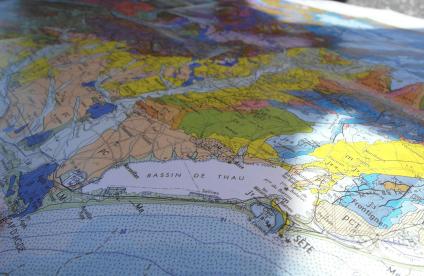
    InfoTerre is the web portal for access to BRGM scientific data. It offers free online access to the BRGM’s geoscientific data: geological maps, subsoils databank (BSS) and a wide array of thematic data.

    Whether you are looking for a position as an engineer, technician, assistant, or manager, the BRGM Emploi website brings together all the latest job offers available at BRGM.

    Supporting the needs of companies, design offices, administrations, local authorities, etc. BRGM Formation – BRGM's training branch – helps to develop scientific and technical skills through both "off-the-shelf" and "tailor-made" training courses.

    Our publications branch, BRGM Editions, offers a selection of geological maps, books and popular science material in the geosciences which is unique in France.

    From the creation of BRGM in 1959 to the current challenges of responding to new geoscientific issues, this site traces the history of the French Geological Survey.

    The digital version of the BRGM activity report reviews the highlights and major results of the year. An enhanced digital version for greater reading comfort.

    HAL-BRGM is the BRGM's portal for scientific publications. It contributes to the development of free access to scientific information.

    The Lumni Enseignement platform provides primary and secondary school teachers and their pupils with a wide range of educational resources from public partners (public media and cultural and scientific institutions).

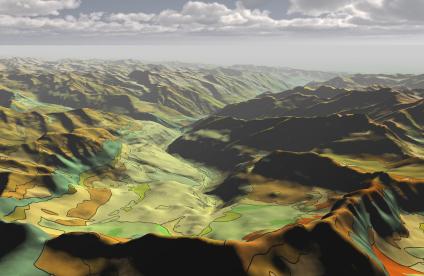
    Helicopter-borne geophysical acquisition in the Massif Central.
    The work of BRGM, the French geological survey, is organised around six scientific and societal issues. Discover the main websites and databases related to each of these issues.

    Geology and subsurface modelling

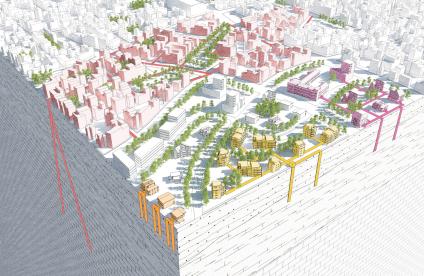
    Now that the geological map of France is complete, the French Geological Reference Platform has been launched as a digital resource for homogeneous and coherent geological information in 3D. A new scientific challenge for the BRGM.

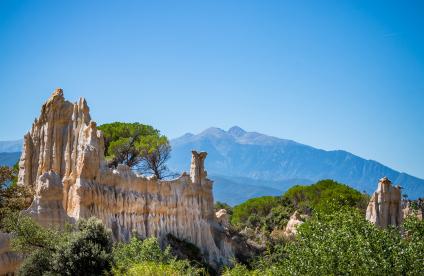
    The Geology of France website disseminates the results of work in all disciplines of Earth Sciences concerning the French territory and neighboring regions.

    OneGeology is an international initiative of the geological surveys of the world, to create dynamic geological map data of the world, available to everyone via the web.

    The BDSolU database contains analyses of soils sampled in urban areas and the information used to describe their sampling. Its purpose is to better understand urban soils in urban agglomerations.

    Groundwater and resource preservation

    ADES is the national groundwater data access portal for metropolitan France and overseas departments. It gathers quantitative and qualitative data on groundwater on a public website.

    The MétéEAU Nappes website is an innovative platform that supports decision-making for groundwater management. It enables users to monitor groundwater levels in real time and to establish forecasts of future levels.

    All public information about groundwater. Find out about your region and local area.

    BDLISA, the French national hydrogeological database, is a tool for locating reference data on groundwater across France. It was set up to provide maps of hydrogeological units for users in mainland and overseas France.

    The National Database of Quantitative Water Abstractions (BNPE) is the national tool dedicated to water abstractions in mainland France and the overseas departments.

    EauFrance is a public information service on water and aquatic environments. Its aim is to facilitate access to public information in the field of water in France.

    As a permanent service of the Water Information System, Hub'Eau provides Rest APIs that facilitate access to data in formats that are easy to use and conducive to reuse (CSV, JSON, GeoJSON).

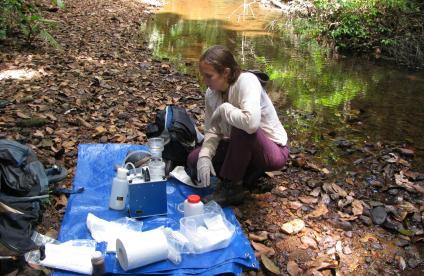
    It is easy to find measurement data on the quality of rivers and water bodies via the Naïades website. Surface water quality monitoring covers various types of data such as hydrobiology, hydromorphology, physicochemistry and temperatures.

    AQUAREF is a national reference laboratory for monitoring aquatic environments. Its aim is to strengthen French expertise in the field of aquatic environment monitoring by networking the skills and research capacities of the five public institutions directly concerned: BRGM, IFREMER, INERIS, Irstea, LNE.

    Risks linked to the ground and subsurface

    Géorisques is a public information portal which enables users to assess their exposure to major risks in France.

    The main missions of BRGM's Department for Mine Safety and Risk Prevention are to carry out safety work as delegated project owner, interventions following expropriation measures, monitoring of mining site structures and management of the post-mining information system.

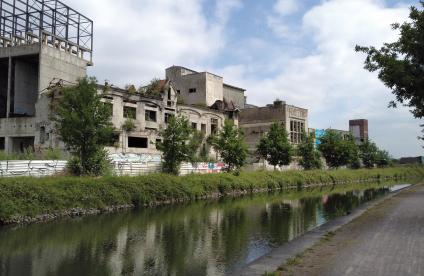
    The Polluted Sites and Soils section of InfoTerre is developed by BRGM in collaboration with the Ministry of the Environment. It covers pollution, mainly of industrial origin, of sites, soils and groundwater.

    Faced with growing external demand for predictive risk scenarios, BRGM has developed Vigirisks, an aggregator tool that enables it to leverage its expertise and effectively meet the needs for modelling/simulating risks and assessing the vulnerability of territories and infrastructure in order to better respond to socio-economic challenges.

    BRGM, together with EDF and IRSN, have collaborated to compile seismic data. SisFrance is the reference database for consulting historical earthquakes in France. The site provides a tool for querying the database using temporal (dates), spatial (locations or coordinates) and earthquake intensity criteria.

    Observation and decision-making tools for regional stakeholders:

    Littoral Occitanie

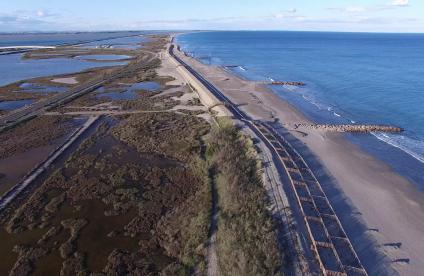
    This internet portal lists the extent of knowledge on the coast of Occitania in the fields of planning, hydrology, geomorphology, dune ecology, risk management, impacts of climate change, etc... It is aimed at citizens as well as managers, elected officials and decision-makers.

    Go to the website

    Observatory of the Catalan Sandy Coast

    The Observatory of the Catalan Sandy Coast, known as ObsCat, aims to gain a better understanding of the evolution of the sandy coastline and thus better apprehend the risks of erosion and marine submersion.

    Go to the website

    Regional Observatory of Major Risks PACA

    The PACA Regional Observatory of Major Risks provides actors and the public with data and information concerning natural and technological risks in the Provence-Alpes-Côte d'Azur region.

    Go to the website

    Nouvelle-Aquitaine Regional Risk Observatory

    A regional multi-partner portal focusing on natural, technological and health risks to increase knowledge sharing for the benefit of all.

    Go to the website

    Observatory of the Nouvelle-Aquitaine Coast - OCA

    The Observatory of the Nouvelle-Aquitaine Coast (OCA), supported by BRGM and the ONF, provides coastal stakeholders a tool for observation, decision support and knowledge sharing for the management and prevention of coastal risks.

    Go to the website

    OLiMar - Observatory of Coastal Dynamics of Martinique

    The Observatory of Coastal Dynamics of Martinique (OLiMar) is a network that carries out and disseminates information about coastal dynamics in Martinique.

    Go to the website

    Observatory of Coastal Dynamics of French Guiana

    The Observatory of Coastal Dynamics of French Guiana is a tool dedicated to the observation, knowledge and support for the management of land-use planning issues on the coastal strip.

    Go to the website

    Mineral resources and responsible supply

    Minéralinfo is the French portal for non-energy mineral resources, edited by the Ministry of Ecological Transition and BRGM. It disseminates public information and raises awareness of the issues related to non-energy mineral resources (metals, industrial minerals and construction materials).

    Minergies is the portal for underground energy resources (hydrocarbons, high-temperature geothermal energy, underground storage). Aimed at all institutional and economic players as well as the general public, this site is the tool for accessing underground data collected from operators.

    TEX-InfoTerre is the reference website provided by the French Ministry of the Environment for all those involved in the recovery of excavated soil in France.

    Subsurface energy and decarbonisation

    Geothermal energy includes all the technologies that make it possible to exploit the Earth's heat. It offers a huge energy reserve and a range of solutions that meet a variety of needs in a sustainable manner.

    BRGM's Geothermal platform aims to optimise the energy and environmental performance of geothermal exchangers. It can be used to test any type of closed-loop surface exchanger.

    The Télé-GMI website allows for the online declaration of small-scale geothermal energy projects (GMI). Online declaration was introduced in 2015 to facilitate the implementation of most surface geothermal energy operations. Deep geothermal energy operations, which have the potential for greater impact, are subject to a different regime.

    Digital technology for Geoscience

    DUPLOS is the portal for declaring underground works (including drilling operations) in line with the French Mining Code. It is coupled with the DiaLog tool for describing drilling operations.

    The Géocatalogue is the access point for the INSPIRE community portal, to metadata published by the French public authorities and allows to meet the obligations of the INSPIRE Directive. As such, it is the tool enabling France to provide the indicators for European reporting.

    Manage waste traceability safely.

    The MonAIOT portal, implemented by the French General Department for Risk Prevention and the BRGM, provides operators and managers to access all the applications related to the regulatory environmental monitoring of classified facilities.

    BRGM develops databases for analytical and predictive 3D-modelling of the status of the ground and subsurface
    Access geological knowledge, groundwater levels and geological maps of France at your fingertips.

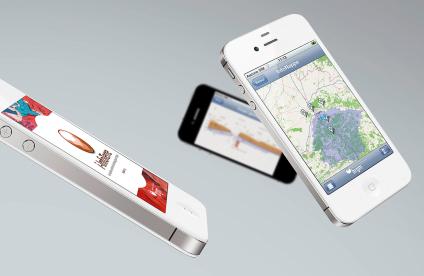
    i-InfoTerre is the BRGM’s data viewer app for mobile phones. It offers a simplified version of the InfoTerre portal.

    Go to i-InfoTerre on Appstore

    Go to i-InfoTerre on Google Play

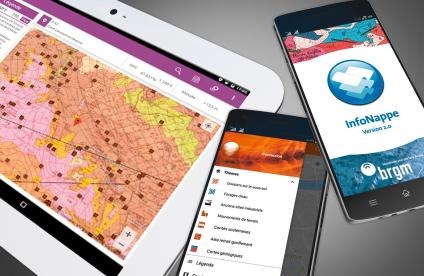
    InfoNappe sends data on water table levels to your mobile phone via the access portal to ADES, the groundwaters databank.

    Get InfoNappe free of charge from AppStore

    Go to InfoNappe on Google Play

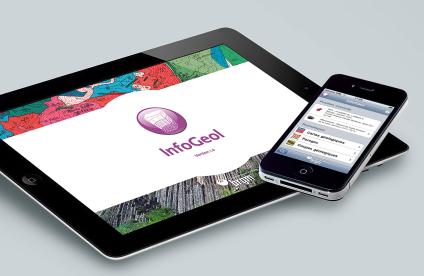
    The BRGM's InfoGéol app provides access to geological data in France. It is available free of charge for iPhone, iPad and Android.

    Get InfoGéol from AppStore

    Get InfoGéol on Google Play