
The 2023 edition of the Science Festival will take place across mainland France from Friday 6 to Monday 16 October 2023.
© Ministry of Higher Education and Research
The Science Festival is a popular, flagship event celebrating the sharing of science. It will take place from 6 to 16 October 2023 in mainland France and from 10 to 27 November in French overseas territories and internationally.
Organised each year by the Ministry of Higher Education and Research, the Science Festival is a must for all audiences. Over ten days, families, schoolchildren, students and science fans/enthusiasts exchange ideas at thousands of free events organised across France.
BRGM, the national geological survey, will be taking part in the Science Festival in Paris, Orléans and across France.
Sport & Science, the national theme in 2023
Sport occupies a central position in our daily lives and in society, as a leisure activity or in education, at amateur and professional level, whether we actually practice it or not. The importance of sport is reflected in its omnipresence in social, economic and media issues – and also in science. Whether we’re talking about basic well-being or elite performance, sport touches upon a wide range of multi- and cross-disciplinary fields, including ecology, sustainable development, economics, sociology and health.
[Replay] Science en direct (Science Live) 2023 - 2024 Olympics: what lies below the athletes' feet?
Transcription
Now I'll take you to visit the sites of the 2024 Olympic and Paralympic Games to see what will be hidden below the athletes' feet. I'm here with three researchers from the BRGM. Hello. Welcome. All three of you are geologists. I'll introduce you. On my left is Blandine Gourcerol. Hello. Next to you is Anne-Sophie Serrand. And we are delighted to welcome Nicolas Charles, on the far left. First we'll travel far from mainland France, to the South Pacific Ocean, to Tahiti, in French Polynesia, and more precisely, to the village of Teahupo'o, because an Olympic event is going to take place there. Blandine, what's going to happen in French Polynesia? All of the surfing events will take place in Teahupo'o, which is a very unique site. What's so special about it? Why will they be there? Teahupo'o has reef break waves, which are fairly regular, very powerful, tubing waves that will put all the athletes on an equal footing. They are extraordinary waves that are perfect for surfing. In the surf world, the waves there are famous, especially since American surfer Laird Hamilton rode a wave over 12m high there. I wouldn't want to be him. Hats off. So what explains the impressive waves at this particular spot? They're caused by the characteristics of Tahiti, where Teahupo'o is located. It's important to understand how an archipelago is formed. Tahiti is part of the Society Islands archipelago, a string of volcanic islands, one of which is Tahiti, which is also an extinct volcano. A string of islands is formed by a hot spot, an upwelling of magma that cracks through the Earth's crust... So the hot spot is underwater?
-Exactly.
-Inside the Earth's crust?
-Yes. It breaks through the oceanic crust. That creates a volcano. As the oceanic plate gradually moves away from the ridge, the volcano gradually moves away from the fixed hot spot, which continues to emit magma. It's as if you had a sheet of paper and made little holes in it while moving it around. You'd end up with lots of little holes. Exactly. So it creates a series of volcanoes that gradually go extinct. When those volcanoes go extinct, the plate gradually sinks down, because as volcanoes cool, their density increases. The volcanoes subside and then erode. You could call that the life cycle of an atoll. A volcanic island forms, and all around the island, fringing reefs form. So they form a sort of ring around it? Directly on the volcano wall. The shallow water and bright light make it possible to generate life. Over the course of the life of the island, it gradually erodes and subsides slightly. Then a lagoon is created between the coral reef, the lagoon and the island. That's the case of Tahiti. Further on in the life of an atoll, the island ends up disappearing. It gets totally submerged. But you still have the lagoon and the barrier reef. Then, when the oceanic plate sinks too far compared to the reef's vertical growth, the atoll starts to disappear. The volcano that was originally there completely disappears and only the reef will remain. But it dies at some point. What kind of timeframe is this? Does this mean that in a few years, we won't be able to surf there? This is on the scale of a few million years. That makes me feel better. So we can watch the Olympics and Paralympics. Can you explain how these waves are formed? We now understand that a reef formed. But why do we get these waves now? Tahiti is on a lagoon. There's an island, the lagoon and the barrier reef. When the wave arrives, it becomes more powerful when it hits the reef. It picks up more water as the water in the lagoon is drawn in by the power of the wave. So it kind of sucks it up? Totally. The two forces align, and that forms tubes. That's why you get such impressive waves. The reef is a mix of plants and animals, right? And minerals? The reef needs the rock face to grow on. There are very important interactions. It's a habitat for a number of fish. It's a place that is a very important ecosystem for the planet. You said it's a habitat for animals. But it's also helpful for the people on these islands. Why is that? A barrier reef, as the name suggests, creates a barrier for this island, protects the shore from storms and waves, protects the lagoon and its ecosystem and the mangroves found further inland, and prevents disruption of the ecosystem there. It's funny, because it sounds like the reef forms waves, but it also breaks them.
-Exactly.
-That's interesting. Let me turn to you, Nicolas. Here, closer to mainland France, we have no reef. So how can we protect ourselves and protect our coasts? That's a major issue with global warming. We know that the sea level is rising a few millimeters every year. Take the example of the Mediterranean coast, in Sète, where there are coastal beds, or thin coastal strips of sand. Experiments have been done on the seabed. They laid huge socks to break the swell, to reduce erosion on the coast. So there's research being done to minimize coastal erosion. Since we're in mainland France, we'll go to another Olympic and Paralympic site, a legendary venue that will host the equestrian, para-equestrian and pentathlon events. It's Versailles. It's a site with a particular landscape. Anne-Sophie, can you explain it? Versailles is gutter-shaped. It's in a gutter-shaped fold. In your field, you call it a syncline.
-Yes.
-We have a diagram. We'll show it and you can explain what we're seeing. Here you see the syncline. What do the different colors represent? They represent the different layers, the different geological formations that have been folded, as you can see here, into a gutter shape. That started around 40 to 50 million years ago, when, paradoxically enough, since it was far away, the Pyrenees formed. 40 million years ago, Iberia, or what is now Spain and Portugal, was where Brittany is. It started to turn and then pushed the bottom of France, creating a mountain range, the Pyrenees.
-We'll get to that. I'd like to understand how big this fold is. Is it the size of the gardens of Versailles? The whole city? How big is it? We have a part of the geological map of Paris here. It's on the scale of several kilometers. So it stretches over large distances.
-Dozens of kilometers. You said there's a link with the Pyrenees.
-Yes. When the Pyrenees were created, that caused folding a very long way from the Pyrenees. The effects of that Pyrenean collision went all the way to Normandy and near Paris. Take my sheet of paper example again. It's like colliding two sheets of paper and creating folds at the other ends.
-Yes. We can try it.
-I don't want you to damage your map.
-It's exactly the same principle.
-OK. Does the study of landforms have a name in geoscience? What's it called? It's called geomorphology. It describes the landscape in terms of folds and different landforms, including one type that Nicolas will talk about, the inlier, which gives us clues to understanding the geological history of the area. Do you study landforms? Yes. That's part of the studies we do as geologists. Now we'll visit a third site: the Butte Montmartre. We'll stay in the Paris region. Is that where the cycling event will be, Nicolas? It'll be part of one of the ascents in the cycling event. The Butte Montmartre is the highest point in Paris. It's 130m above sea level. It's 60 to 70m higher than the lowest point in Paris. So that's a bit of a climb. Like Anne-Sophie said, it's a unique landform. It's another geomorphological element. It's a typical structure called an inlier. It's a hill, a landform, that is isolated and reflects the forms that were around it but no longer exist because they have eroded. That erosion took place fairly recently, a few million years ago.
-Everything is relative. "Recently..." I think like a geologist. We look at long periods of time. What's unique about Montmartre... Everyone knows the Sacré-Coeur chapel. The basilica. The basilica sits on a foundation 40m deep. Why? Because of the nature of the ground below the hill. At the top of the hill, you have Fontainebleau sand, which is found higher up. There's a sample here. Fontainebleau sand, Anne-Sophie, at the Versailles site, is used in Olympic riding grounds. Can you find it all over Paris? Yes. It's mined around Fontainebleau for its very high-purity silica, especially for glassmaking. So knowledge of the Butte Montmartre made it possible to build the Sacré-Coeur basilica? Yes. To support it better, it's good to know what's going on deep below it, particularly...
-To adapt? Yes. You need fairly strong pillars to ensure the building's stability. But what's unique about the Butte Montmartre is that it was a quarry area. There was a lot of quarrying in the 19th century, and what was mined? This type of rock. What's that? It's a mineral: gypsum. Gypsum is used to make plaster. In scientific and English literature, you see the term "plaster of Paris," because historically, plaster was mined all over the Paris region.
-It still is.
-Is it still mined? Particularly around Roissy. That's a well-known source of gypsum.
-Is it found elsewhere in France?
-Yes. In the south of France. There are other deposits, but it's mostly mined in the Paris region. Let me go back to the Butte Montmartre. You said it's an inlier. It's a vestige. But what else is under the ground below Paris? Gypsum? Yes. Gypsum is found throughout the Paris region. On the Butte Montmartre, unfortunately, because of urbanization, we lost direct access to the outcrops. But you find them in the area I mentioned, near Roissy or Orly. Under Orly, there's gypsum. You need to see the continuity. Here's a map. There's a geological cross-section. It's like cutting a cake. You can see the different layers that emerge. You can see the continuity of the gypsum layer. Where does gypsum come from? Why is there so much in the Paris region now? This gypsum dates back to around 35 million years ago, at a time when... So very recently, for you. Yes, on a geological scale. The Earth is 4.5 billion years old, so that's very recent. 35 million years ago, the landscape was very different than it is today. There was a very shallow sea. That very shallow water caused a lot of evaporation. A bit like in a salt marsh, the gypsum mineral was left behind and is now mined. Can you describe the rock in front of you and what's inside it? Here we see very particular small formations, which are gypsum crystals. We call it "lark's foot" because it typically looks like the shape of a bird's foot. There are several types. This is what is typically mined in the big quarries in Paris, whether open-air or underground. There are real cathedrals. Anne-Sophie and I were lucky enough to visit them. You have arches underground that are a dozen meters high. We haven't talked about the other rocks in front of you. Can you describe them? They're volcanic rocks. We brought some lava. This is lava from Vesuvius. Why are they two different colors? It's their composition. They're a bit different. This one may have more magnesium than this one, which may have more iron. OK. And what about that one? That's a volcanic bomb.
-It's a...
-A volcanic bomb? What's that? It's when a strombolian eruption emits fragments that crystallize in the air. OK.
-What?
-It's defused.
-It's safe.
-I feel better now. Tell us more about your work at the BRGM. What do you work on? Do you work more on metals, Blandine? Yes. Metals and critical metals, especially lithium, which we we did a previous video on. What are you specifically interested in? We're trying to find out where the metals are that our society needs and look critically at their potential mining or in relation to mining criteria. Later we'll talk about materials and metals used in sports. Anne-Sophie, what are you working on at the BRGM? We do studies for industrial companies that have very specific problems sourcing certain metals or minerals, because metals and minerals are in everything. I challenge you to find something here that doesn't have an ounce of mineral in its composition. So we support industry, but we also support public policy. We help ministries and decentralized government agencies consider responsible sourcing of mineral raw materials. Nicolas, the BRGM plays a key role in finding climate change solutions. Yes. Through a range of disciplines. Here we have this reference document called a geological map. That's part of our work. We are France's leading geological mapping institution. We are a knowledge base for many other fields, like risk management at the regional level. This summer, we heard a lot about water management with the drought. In France, more than 2/3 of the water we consume from the tap comes from underground. So we need water specialists, or hydrogeologists. They were in great demand this year. They use our knowledge of what's underground from this reference document. It's all connected with global warming. We also look at long periods of time. The global warming we're experiencing is neither the first nor the last. The planet has experienced them throughout history. If we understand past climate changes, we can better understand how to mitigate and better adapt to this one in the future.
[Replay] Science en direct (Science Live) 2023 - What are the athletes' facilities and equipment made of?
Transcription
We'll look at sports equipment under the experts' microscope. I'm pleased to welcome Blandine Gourcerol, Anne-Sophie Serrand and Nicolas Charles. The three of you are geologists at BRGM, the French geological survey. Together we'll look at the materials used in three types of sports equipment. First we have a curling stone. Then we'll talk about tennis courts. Third, we'll talk about medals, like the one around your neck, Blandine. We'll start with curling. Let me remind those watching that curling is the famous sport played on ice with a big stone. I won't say more about it yet. We'll find out what's inside it. The aim is simple. You give the stone a little push and let it slide on the ice to try to hit the center of a target. Nicolas, what kind of stone is a curling stone? This stone weighs around 20kg. In terms of rock, it's made of granite, Scottish granite. So far, nothing unusual. No. As you said, it comes from Scotland. Is that why it's special? Yes. For curling stones, there's only one quarry in the world that supplies this particular type of stone. There is a second quarry in Wales, but there's only one main place where this rock is mined. So what you're saying is we're looking at a rare and precious object. So we'll be careful with it. That granite was formed around 60 million years ago. Why then? That was still the Cretaceous period. Dinosaurs had just disappeared from Earth. Something special happened: the opening of the North Atlantic. We know that oceans are born and disappear over time, due to plate tectonics. 60 million years ago, the Earth's crust was stretching and started to break, and deep down, that generated magma. That magma eventually became granite. What creates Is there a required temperature? What creates granite specifically? This particular granite formed several kilometers underground. This was originally part of the Earth's mantle, below the Earth's crust. Magma is a liquid that rises through the different layers of the planet through fractures. Sometimes it gets stuck deep down and slowly cools. So the temperature is hundreds of degrees Celsius. That cooling takes hundreds of thousands or even millions of years.
-OK. You mentioned Scotland. This granite is found on one island in particular. Its name is Ailsa Craig. It's a tiny island off the coast of Scotland. Historically, there was an old quarry there where they cut these stones.
-It's still mined sometimes.
-So curling was invented a bit by chance, or with a bit of luck, because they stumbled on some granite that worked well. I'd like to look at the properties of granite. Why does curling use this type of rock and not another? This granite is extremely homogeneous. It has very few flaws. It's not fractured. So it has very consistent properties. The other thing is that it's isotropic, as we say in geology. That means that no matter where they are, the minerals have the same properties. The rock has not been deformed. The rock is homogeneous, which is extremely important for balance when it comes to pushing or hitting curling stones against each other. Does being homogeneous make it more temperature-resistant? Is that useful for curling? As for temperatures, given the temperature at which it formed, 700 or 800 degrees, being on ice doesn't generally do much to it. Is granite found anywhere else in the world? You can find it in France, a few thousand meters below Paris. But otherwise, if you want to see it for yourself, there is some in Brittany, in the Massif Central, in Mille Vaches and Limousin. You can find it in the Cévennes, in Corsica, and in certain central areas, in the Pyrenees, and in the Canigou massif and Mont-Blanc in the Alps. What's the difference between granite from Brittany and from Corsica? It may of course be age and also the context of the geological formation. Some differences are linked to crustal stretching, while others may be linked to a collision between two plates, which means they have different chemistries and different minerals, and that creates a wide variety of granite. There are also different colors. Some granite is very light-colored, like in Limousin. This granite is fairly dark. It has to do with the nature of the minerals found in it and their chemistry. This specific granite is found in Scotland. Is it found anywhere else? For its mechanical properties, this quarry is renowned as the only one of its kind. In terms of the geological context, with the opening of the Atlantic, this granite has "cousins" in Northern Ireland, Wales and even Greenland. When the continents separated and the sea appeared, did the geology... Did the geological layers end up on both sides? Yes. The continents were separated by the Atlantic, but originally, they were neighbors, side by side. So on both sides of the Atlantic, you find rocks like this that are the same age. You don't find granite in this shape in nature. This has been carved for curling. There must be very specific rules. Yes. It's standardized. I don't remember the exact size and weight, but everyone has to be equal on the curling ice. Great. We've learned a lot about curling. Now we'll look at tennis courts. They're considered sports equipment too. Today, we'll look at Roland Garros Stadium, since that's where they will hold the tennis competitions in the 2024 Olympic and Paralympic Games. Contrary to what one might think, the ground at Roland Garros is quite unique. One specific feature is its ochre color. Anne-Sophie, explain where that color comes from. Here we have a reconstruction of the composition of a clay tennis court. As you can see, its characteristic, ochre-orange color comes just from a 1-2mm layer on the surface. It's only on the surface. Yes. On the surface, you have a 1-2mm layer of crushed brick. Like the brick used in houses? Exactly. Below it is a column. This model is not fully to scale. There is a column about 80cm high where you find superimpositions of different layers. There's a story behind the use of crushed brick. Where did that idea come from? Clay tennis courts were invented in around 1880. Before that, tennis was played on grass. Two brothers noticed that when playing tennis in Côte d'Azur in the summer, the grass was extremely dry. So they came up with the idea of using another surface to be able to play all year round. So that's a very superficial layer of brick. How thick is a tennis court?
-How many centimeters?
-In total, 80cm from top to bottom. You can see that inside, it's made of several layers. Can you describe them? From the bottom up, it starts with a layer of very rough limestone, measuring 15 to 20cm, to drain the water. Above that is a layer of slightly finer limestone that will also help with drainage. Above that, you have a brown layer. It's made of pozzolan, a volcanic rock... We have some samples here. It's an extremely porous rock. Is that what's used in flower pots? Yes, for the same properties. Its porosity allows it to store water and release it when needed. This layer of scoria or pozzolan can be replaced by bottom ash produced in incineration plants. Above that layer, you have a layer of finer limestone. What role does that layer play? It maintains the plasticity of the ground. And above that is this very thin layer of clay, or crushed brick. The crushed brick layer has other benefits for athletes. What are they? One of the advantages of using crushed brick is the high color contrast between the yellow tennis ball and the orange crushed brick. It also makes it possible to slide. Professional tennis players who play particularly well on clay courts develop sliding techniques because of these different layers that they can't use on other surfaces. Some players do better on them than others, like Rafael Nadal. Thanks for that look at the Roland Garros tennis courts. And here's a fun fact: during the Olympics, the stadium won't just be hosting tennis but also boxing competitions. Now let's move on to another type of material and another piece of equipment: the medal, the symbol of sports. We have to talk about those. Blandine, tell us about them. As you know, there are gold, silver and bronze medals. But their composition may not be what you think it is. What are these medals made of? A gold medal is made up mainly of silver and plated with 6g of gold. Athletes are being cheated a bit. It's gold-plated. It has some traces of copper, a lot of silver and little gold. The silver medal is made of silver and copper. And the bronze medal is made of brass, which contains zinc, copper and a little tin, sometimes up to 0.5%. These medals weigh 400 to 500g. OK. So they're alloys. They contain a combination of metals. Do you know how many medals will be given during the Olympics? How much metal does that represent? For the Paralympic and Olympic Games, around 50,000 medals will be given.
-I have my notes here.
-Smart. 2,535 Olympic medals will be given and 2,411 Paralympic medals, representing a total of 9.7kg of gold, 1,780g of silver and 800kg of brass. That's quite a lot, especially when you consider that some precious metals are vital, especially for the energy transition. Is that what you're working on? Yes. Silver, gold, copper and zinc are metals used for certain properties in energy storage, to store solar and wind energy. You see them being used for connectivity. You also see them being used for electromobility, in electric cars. Currently, are these medals competing with demand? We did a little exercise. 800kg of copper is roughly equivalent to the amount used in 10 electric cars, which is relatively small. Given the number of competitions, there is a cost, but it's relatively small compared to society as a whole. What is the demand for metals more generally? For metals used in the energy transition, demand is growing exponentially, particularly for copper, which the EU has designated as a strategic metal. We will need more and more of these metals as we replace our cars and build more solar panels in the future. So there's an interest in finding new sources. How do we do that? To find new sources, we do metallogenic studies. We geologists try to determine and predict certain geological locations around the globe where these metals are found. Then we do studies to evaluate their production potential to mine as much as possible and as responsibly as possible. To avoid taking too much metal from the environment, a unique initiative was taken during the Tokyo Olympics to make the medals. Can you tell us about it? It was very interesting. The Tokyo Medal Project, which was launched in 2017 by the Olympic Organizing Committee, aimed to collect smartphones and computers in order to recycle them and create recycled medals for all of the competitions. For the initiative, they received almost 50,000 tons of materials for recycling and were able to produce the medals for the Olympics from recycled metals. Back to the demand for metals for the energy transition. Recycling is not the only solution. That alone won't help. It is one solution. It needs to be studied, but it's not an answer in itself, since, as I said, demand is growing, and all of the recycling possible cannot meet the demand for all the metals we will have and for future technological developments. We're talking about medals, but let's talk about another symbol: the cup, and the World Cup in particular. Contrary to what one might think, it's hollow. Is that right? Nicolas, can you tell me how its shape has evolved over time? It has evolved over time, since you know that after a country wins a certain number of times, it is awarded the cup. The current cup is made mainly of gold, but not completely. It's also an alloy of other metals. Gold is 20 times denser than water. You might never see a player holding it up, since it weighs about 6kg, and if it were made entirely of gold and not hollow, it would weigh dozens. Blandine has a small green rock in front of her. That's called malachite. If you picture the World Cup, it has two small green lines.
-We'll show a picture of the World Cup. There's a little green line... There are two small green lines at the base. There you can see them. Those are actually malachite. It's a mineral from which we extract copper, which Blandine talked about. It plays a big role in the energy transition. Does it still make sense to use such precious metals for world cups? It doesn't have a huge impact... It's like medals compared to the car industry.
-In comparison, it's nothing.
-If people want to learn more, where can they find you at the Science Festival? We're right behind here. We have a game that all children and grown-ups can come and play to learn about geoscience.
-A floor game?
-Yes. What does it teach people about? Geoscience careers, characteristics on the ground and underground, and some interesting facts about the history of the Earth. Great. Thanks to all three of you for coming and telling us about materials used in sports.
2023 Science Festival: meet our ambassador
Transcription
BRGM AMBASSADOR WHAT DOES THE SCIENCE FESTIVAL MEAN TO YOU?
The Science Festival is an opportunity to show what we do and make our work known to the public. So at the BRGM site, I do a piezometer workshop. It's a well that goes in the ground so you can see the water level. We measure the water level with a sensor. We put a camera in the well and we can see the water table, because the camera goes in the water. It's a chance to see the water flowing beneath our feet. It also gives us an opportunity to talk to people from different backgrounds and of different ages and sometimes even inspire teenagers and children to become scientists.
WHAT CONNECTS YOUR RESEARCH TO "SCIENCE & SPORTS"?
In terms of sports, what attracted me to caving was pushing yourself but also knowing your body, knowing your limits and listening to your body to know when to stop, when to eat and when to rest.
DO YOU HAVE ANY STORIES ABOUT YOUR WORK AND SPORTS?
We all have lots of stories, especially from working in the field. We have piezometers that we monitor regularly. I worked for several years in Picardy, in the former Picardy region, where we managed 113 piezometers. Each one has a story. After a few years, you know them by heart. They're like our children. We pamper and take care of them so they can give us data. We know their history and their owners. So we have a lot of stories about these piezometers. We also have a lot of stories from going out and doing field campaigns with our little sensors to measure as many wells as possible in one area to make a complete groundwater map. We go door-to-door, knocking on doors to ask if people have a well. So we meet a lot of people. Sometimes people don't even know they have a well in their backyard, but they're in our database. Sometimes we see really amazing wells in castles and even churches. You pick up stories along the way when you're out in the field.
Events in which BRGM is taking part
Paris – Science en Direct (Live Science): the national launch event for the Science Festival – 6-8 October 2023
To mark the national launch of this 32nd edition of the Science Festival, an exceptional Live Science event is taking place at the Musée de l'Homme in Paris. Over three days, from 6 to 8 October and from 1:30pm to 7pm, admission to the museum will be free. The aim is to give everybody access to science, with workshops, tours, meet-ups and live TV broadcasts.
BRGM stand – Friday 6, Saturday 7 and Sunday 8 October 2023
Explore the fascinating world of mineral resources and geology at the BRGM stand and enjoy a rich, entertaining experience.
Live Science programme – Sport and technology – Materials in sports equipment, on the pitch and in medals – Sunday 8 October 2023, 4:25 pm
Moderated by Jean Fauquet, with Anne-Sophie Serrand, geological engineer at BRGM, Blandine Gourcerol, researcher at BRGM and Nicolas Charles, geologist at BRGM.
Over three days, some twenty scientists will be talking about the theme of the 32nd Science Festival – Sport & Science – with events hosted by science journalist Fred Courant and the team from Esprit Sorcier.
Orléans (Loiret) – Science Village at the Orléans Museum for Biodiversity and the Environment (MOBE) – 14-15 October 2023
Saturday 14 and Sunday 15 October 2023
Free admission, 10am to 6pm
BRGM participation – Potholing, a sport that provides a better understanding of underground environments
Centre-Val de Loire Regional Potholing Committee and BRGM
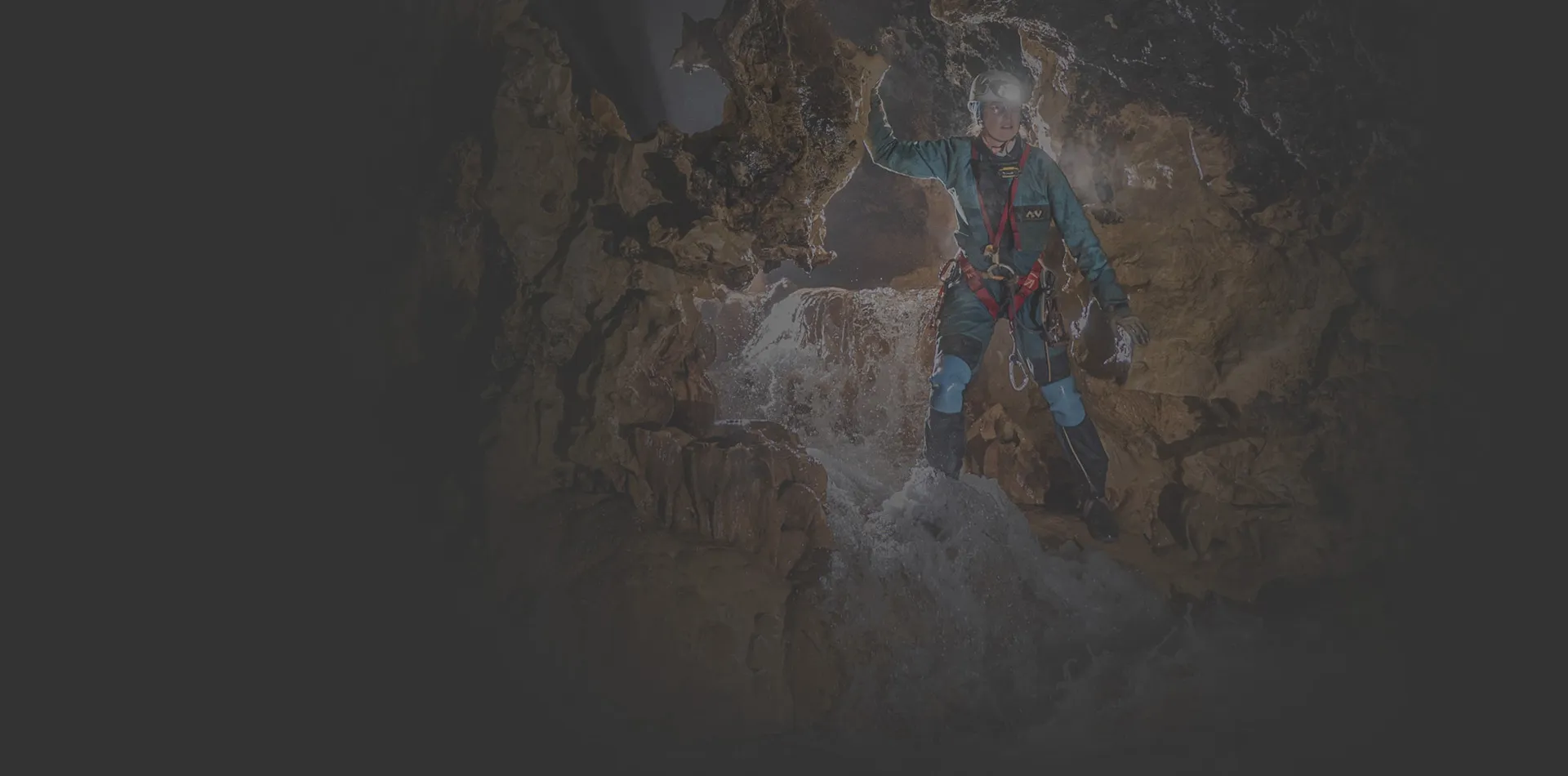
The sporting disciplines of cave diving and potholing turn an eye to the underground environment, contributing to our knowledge of karstic environments and providing new input for the work of researchers. Experience potholing with our 45-metre introductory course.
Gardanne (Bouches-du-Rhône département) – Science Village – 5-7 October 2023
BRGM is organising games on rock identification as well as a virtual expedition at the Science Village in Gardanne, from 5 to 7 October 2023.
A game about rocks
Recognising rocks, mainly those found in the Provence-Alps-Côte d'Azur region. The game involves identifying rock samples or fossils through sight and touch. Each player or team uses a simple description sheet to help them identify and discover the rock through its colour, texture, hardness, appearance and sometimes its smell.
A game about mines
A board game with questions on mines, miners and geology.
Virtual potholing expedition
Plunge into the depths of the Earth through a former mine gallery or underground quarry. The animation is in two parts: a video on the acquisition and processing of 3D data underground (about 5 minutes) is followed by a virtual potholing expedition, where participants go underground or hover above the void. Each person in turn will be given a 3D mouse so that they can move around the 3D scatter plot. This animation is a fun way to learn about underground voids and the problems they raise. It also provides an insight into an innovative technique for acquiring geometric data using a hand-held laser scanner.
Montpellier (Hérault département) – Science Village – 9 October 2023
Eau'secours!, a workshop on water sharing for 7-11 year-olds
At the Science Village in Montpellier, BRGM is hosting Eau'secours!, a workshop on water sharing for 7-11 year-olds.
Where does our water come from and where does it go? What type of water are we talking about? What can we do in times of drought? In this workshop, we will draw, analyse and talk about water sharing.
The UMR joint research unit on Water Management, Players and Uses brings together scientists from all disciplines working together on integrated and adaptive water management issues (INRAE, CIRAD, IRD, BRGM, Institut Agro Montpellier, AgroParisTech).
Besançon (Doubs département) – Science Village – 14 October 2023
Geology in all its variety
At the Science Village in Besançon, BRGM scientists are seeking to gain a clearer understanding of the Earth in order to respond to social issues.
Geology is at the heart of many issues facing society today: whether we’re talking about drought crises caused by climate change, land-use planning to address natural hazards, the need for mineral resources to supply industry or geothermal energy to support the energy transition.
Martinique – Science Village – 18 November 2023
The issues and challenges facing geoscience in Martinique
Find out more about the factors shaping the landscape of Martinique, from river formations to the colour of the sand.
Geoscience plays a key role in helping society adapt to today’s challenges, with particular reference to natural hazards, climate change and the energy transition. BRGM will present the various problems and challenges facing Martinique:
- groundwater in Martinique: resources and quality?
- beach erosion: changes for the future?
- landslides: how can we better understand regional vulnerability in order to reduce the risks?
Part of the stand will also be devoted to the geology of Martinique, with an exhibition of posters and rocks representative of and linked to the island's most remarkable sites.