
BRGM is a partner of L'Esprit Sorcier TV, a new family channel dedicated to science and the environment. The first programme, on the theme of the coastline, is available for replay on YouTube.
4 May 2023

The ocean assaults the coastline - Science in questions

Cécile Capderrey and Gonéri Le Cozannet, BRGM specialists in coastal risks, were invited to appear on the Science en questions programme broadcast on L'Esprit Sorcier TV, on 19 April 2023, to answer questions about the risks which threaten the French coastline.

© L’Esprit Sorcier

Hello. Hi, Marine. Hi, Laurène. Welcome to a new episode of Science en Questions. Today we'll get an update on our coastline. With climate change, it's under increasing threat. What are the risks? What are the consequences for people and what solutions do we have to adapt? We'll take stock with our 2 guests. We'll start our journey now. From the chalk cliffs of Normandy to the rocky Mediterranean coast, the mangroves of French Guiana and the dunes of Vendée, France's coasts offer rich and varied landscapes. These unique ecosystems between land and sea provide invaluable services to protect our coastline. But with the intensification of climate change and the pressure from human activity, our coasts are threatened and damaged. With 20,000km of coastline in mainland France and French overseas regions and departments, France is concerned by these issues now more than ever. We'll look at the risks and possible solutions with Gonéri Le Cozannet.


-Hello. Welcome. You're a researcher at the BRGM, the French geological survey, and one of the authors of the 6th IPCC report. What is the IPCC, in brief? It's a group of scientists acting under the aegis of the UN to answer questions from governments on climate issues. There are 3 reports: one on the climate, another on impacts, vulnerability and adaptation, and a 3rd on ways to limit global warming. What are the latest IPCC climate change forecasts? As long as we continue to emit greenhouse gases, like CO2, methane, etc., the climate will get warmer. And with every fraction of a degree, the associated climate risks worsen, like the risks of heatwaves, marine heatwaves, risks to human health and ecosystems, drought risks, associated water shortage risks and flood risks, because 1 degree of global warming means 7% more water in the atmosphere that comes down as extreme precipitation, but also because rising sea levels lead to marine submersions. We'll talk about that in more detail later. How has the sea level changed over the last 100 years? Over the last 100 years, the sea level has risen... It was stable before 1850, for at least the last 2,000 years, and during the 20th century, it rose by about 1.4mm a year.


-That doesn't sound like much.


-It doesn't, but now it's 3 or 4mm a year. The sea level has risen 20cm in the last 100 years, but it will rise another 20cm in the next 30 years. So we know the process is accelerating and why. Obviously, that has consequences for coastlines. What are the main risks? The first risk from rising sea levels is submersion at high tide. We see that in areas where the ground is sinking for geological reasons, due to groundwater extraction or for completely different geological reasons, like the rebounding of the Earth's crust after the last glacial period 20,000 years ago. 20,000 years ago, there were 2 large glaciers in Canada and Scandinavia. They disappeared and on the edges, the ground is sinking. The US has subsidence, meaning the ground is sinking, and they're seeing a bit sooner than everyone else chronic submersions at high tide that are affecting roads and coastlines and creating organizational problems. Do we have any idea of the frequency? At first, it was once or twice a year. After a few years, it was about 10 times a year, and now, 10 years later, it's practically every other day. The process is really accelerating. That's not the only risk related to rising sea levels. There's also marine submersion during storms and hurricanes. There's erosion. A higher sea level favors erosion because waves reach higher levels on the beach at high tide and during storms. The salinization of estuaries also has impacts on ecosystems, like marshes. We're talking about risks, but we sometimes hear about hazards. What's the difference? A hazard is a physical phenomenon that occurs with a certain frequency and a certain intensity and has a spatial footprint. For example, a storm with a probability of 1% a year is called a 100-year storm. Every year, there's a 1-in-100 chance that storm will occur. And that corresponds to a certain intensity, like 50cm of flooding with a certain water flow rate. That's what a hazard is. A risk is when that physical phenomenon affects physical entities, whether buildings, people or ecosystems. No entities means no risks. It all depends on what you consider an entity. It could be people, because very rapid flooding with fast currents can cause drowning. We'll continue our discussion, but first, we're going to talk to the public. On this show, we often test the knowledge of passers-by with a mystery word. Today we chose "ice cap." Is it at the North or South Pole? It's glaciers in the far north. It makes me think of sea ice. It's the thickness of ice at the poles. It's at the North and South Poles. It shows the state of global warming. What does their melting cause? Rising sea levels. It has consequences for low-lying areas, for example, for shores, islands, peninsulas and deltas. It's a flood hazard, because coasts risk being submerged. I don't know how they live there. In fear, I think. If I put myself in their shoes, it's very dangerous. I wish them luck. Yes. There are people who will be forced to migrate in a few years, maybe in a few decades. I imagine the ice caps will have completely melted in 100 years. I would guess in 2,000 or 3,000 years, but it could be much sooner. It depends on what everyone thinks or doesn't think. Maybe soon or maybe in a very long time. It depends. We don't know. We'll respond to that lady in a moment, but earlier, a woman mentioned sea ice. That's different. Sea ice is ice floating on the surface of the ocean. It does not contribute to rising sea levels. What does contribute is continental ice, melting mountain glaciers or ice caps. An ice cap is a type of glacier that is not affected by topography. There are two particular ones. There are ice sheets, the ice caps in Greenland and Antarctica, but also some on certain islands in the Arctic. They're not influenced by topography? An alpine glacier flows between two mountains. That's not the case here. The ice cap is so big that it forms a kind of dome that flows in every direction. It's actually a type of glacier. We didn't choose "ice cap" at random. It relates to rising sea levels. Yes. Much of the concern about rising sea levels has to do with these 2 ice caps in Antarctica and Greenland. Greenland will represent 7m of rising sea levels and Antarctica around 60m. Fortunately, that melting will take thousands of years, and they may not completely melt if we stabilize climate change. That's the big question. We don't really know how fast these ice caps are going to melt.


-Are 7m and 60m complete melting?


-Yes. Another surprising phenomenon behind rising sea levels is the expansion of the oceans linked directly to global warming. Yes. The Earth is in an energy imbalance because we've changed the atmosphere's composition. With more greenhouse gases, the climate is getting warmer, and 90% of the excess heat from this energy imbalance accumulates in the ocean. So the ocean is warming and expanding. Very little, but it's still expanding. That represents about one-third of the rising sea level. Today, the sea level is rising. It was 1.4mm a year in the 20th century. Now it's closer to 3.7 to 4mm a year. Rising sea levels came up a lot in our interviews on the street. What are the IPCC's forecasts for the next few years? The IPCC scenarios... You might not see them on the screen. OK. Now we have an image. You can see a multitude of possibilities. In black are observations. The colors represent different scenarios. In green are scenarios where warming is stabilized at 1.5C. You can see that won't stabilize sea levels. The ice caps will still be in disequilibrium. So the rise in sea levels by 2100 will be between 40 and 70cm.


-There's some latency.


-But it will continue. For scenarios with high greenhouse gas emissions, by 2100, the level will rise 60 to 110cm. Do you see the 2 scenarios with dashes? 1.7m in 2100 and over 4m in 2150. That corresponds to a very unfavorable scenario in which there is a collapse of part of the ice cap in Antarctica. It's not the most likely scenario, but it can't be ruled out. That's part of the research we're doing with the CNRS and the EUProtect project, which aims to understand the possibilities of this worst-case scenario. That rise will be greater in certain places on Earth. There will be an uneven distribution of the water mass. Where in particular? The regions where sea levels will rise more are those where the water is warming faster than the global average. Historically, that has been the case in the western equatorial Pacific, around New Caledonia. They are also areas... When ice caps and glaciers melt, the water masses that melt are so large that they distort the Earth's gravity field. There's a redistribution of mass away from the source. What actually happens is that water levels rise more at the equator. At the poles, the sea level will even fall, because there is less gravitational pull there. To exaggerate a bit, the Earth will stretch.


-It will flatten.


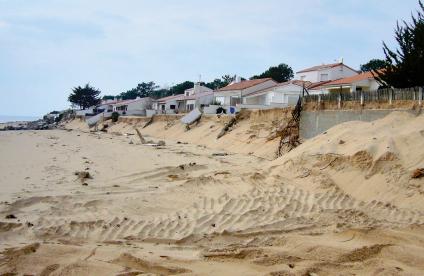
-It will become an oval. And that will have effects on rotation, gravitational field, etc. If we talk about regions, France also has overseas territories. One region where the level will rise faster is Reunion Island. Those are high-risk areas for populations. There are human issues. Yes. On a global level, if you look at all the inhabited areas, if you exclude the areas where the ground is sinking, several centimeters a year in Southeast Asian cities, in most cases, rising sea levels are around 20% of the global sea level rise. So some areas will see impacts a bit sooner, but those that will see much sooner impacts of climate change are areas where the ground is sinking, so cities in Southwest Asia. In France, we have Mayotte. The eruption of a volcano off Mayotte caused the ground to sink in Mayotte, and chronic submergence problems are being reported. Can the ice caps recover? Greenland is actually a relic of the last ice age. Without that ice age, we wouldn't have this ice cap, which is 3,000m high at its center, and it wouldn't be able to reform, because the center of Greenland would be too low. For these ice caps to recover, we would have to return to pre-industrial warming levels. Now we've already gotten warmer. The climate is already 1.1 degrees warmer than during the pre-industrial period. We'd have to eliminate those 1.1 degrees and return to pre-industrial levels. We won't do that. There's no chance of that happening. It depends on the time scale you're looking at. It could happen, but not for tens or hundreds of thousands of years. Faced with the rapid rise in sea levels, the increase in extreme natural phenomena and rapid urbanization, coastlines are increasingly vulnerable. We'll talk about the situation and the solutions being deployed in "Science in Action." Do coasts have to adapt no matter what? Yes. When we talk about erosion and submersion, we think about moving buildings and people. But before that, there are solutions to put in place. Like what? First of all, what's being done a lot in Europe is protection, through engineering. We're building walls, dikes, riprap and groin systems to retain the sand near a city. That's a solution that's being deployed a lot, which assumes that you can, whatever the cost, keep the coastline where it is. It works, but it poses other problems. For example, we don't have an infinite amount of sediment. We'll accumulate it in some places and run out in others. But that's being done a lot. Relocation is another possible solution. There have been a few experiments by the French Environment Ministry. It can't be avoided on the chalk cliffs, but elsewhere, it hasn't really materialized. The Conservatoire du Littoral is trying to look at the unique solution of relocating certain entities slightly away from the coastline while also renaturing those sites. Those are the nature-based solutions my colleague Cécile Capderrey will talk about. Finally, there's a solution called accommodation, which consists of making buildings less vulnerable. You can raise electrical outlets to limit damage during flooding.


-So it's accepting flooding?


-Yes. It works if flooding is not too high and no one's life is at risk. One solution that can be implemented with no regrets is to avoid making things worse by extensively urbanizing low-lying areas. That means stopping or limiting construction on at-risk coastlines. Exactly. That is the purpose of coastal risk prevention plans. Engineering solutions are being adopted by many cities worldwide. For one emblematic example, we'll take a look at Venice. According to IPCC reports, Venice could be underwater in less than 100 years. What's happening now is that if Venice hadn't... Venice would actually be underwater at high tide if it weren't for this barrier. We'll talk about it. Those episodes are called acqua alta. They are high tide submersions, but they're a bit more complicated. They are processes in the Adriatic, but the principle is the same. And in Venice, the city's long-term viability is in question. There is the rising sea level, but the city is also sinking under the weight of the buildings by 1mm a year. Over hundreds of years, that ends up being significant. It's a very unique place. It's a lagoon. Yes. The city is inside the lagoon, and the lagoon is connected to the Adriatic Sea via passages between sandy inlets called lidos. To protect the city, brilliant engineers came up with a solution, the MOSE barriers, which were placed between those sandy inlets. Can you explain the principle? It's what you see on the screen. It's a barrier that closes when the water level is too high, creating a difference in the levels of the lagoon and the Adriatic Sea. There won't be another acqua alta in Venice for decades because every time, they'll close the barrier. The barrier is designed to close during certain events, but if sea levels rise 50cm, which we know they will in the 2nd half of the 21st century, they'll have to close 2 months a year, which will cause problems for boat traffic...


-And ecosystems.


-For ecosystems in the lagoon. They'll have to do something else, but they don't know what. We know the sea level will rise more than 2m. That will raise more questions for Venice and many other sites around the world. So it's not a real solution. It is a solution, but it's just part of a step in an environment that's going to change a lot. We're used to what it is. Sea levels have been stable for 6,000 years. Now they're going to rise for thousands of years. It's a new fact we have to deal with, and everything we do now in coastal areas will have an impact on future generations. It will make their lives either easier or harder. The MOSE barriers took almost 40 years to build. It seems like there's a gap between the time it takes to protect places through engineering and the impacts of climate change. Isn't the window of opportunity already too small? There's a warning in the 2022 IPCC report that any coastal adaptation takes a long time, especially solutions like relocation and building estuarine barriers. Others are faster, like building dikes and some nature-based solutions, if we can agree on them. But it takes 40 years to build an estuarine barrier. In the next 40 years, the sea level will rise 20 or 30cm. We should already be thinking about what we'll do in many estuaries. The danger is that there is no discussion of these issues and we implement engineering solutions without thinking about restoring the quality of the environment. It would be good to discuss those things now. The situation may not be as urgent yet as the issue of heatwaves or droughts, for agriculture, but if we keep wasting time, we will be facing an emergency and be caught by surprise by rising sea levels. The danger lies in responding to immediate risks without taking the IPCC scenarios into account. Yes. For sea levels, when you look at French regulations, a rise of 60cm is used in the regulations. That should change. 60cm is a scenario that will be exceeded in the 2nd half of the 21st century. What do we do next? That's the question. What kind of approach will we take? We should certainly think about how we will adapt to rising sea levels in France. You said, "The question is not if we're going to reach 2m" but when." Exactly. If temperatures rise 1.5C, sea levels will definitely rise 2m in as soon as 100 years and within no more than 2,000 years. But actually, 2,000 years is highly unlikely. It'll be much sooner than that. The most likely window is between 100 and 200 or 300 years. Very soon. You mentioned overseas territories, where there are many coastal risks. Are there in mainland France too? Yes. In general, it's less about the region than the coastal characteristics. These are low-lying and erodible areas. What's a low-lying area? They're coastal plains between 0, or between high tide or even a little below, and 1 or 2m above sea level. In Pertuis Charentais, around La Rochelle, you have many low-lying areas. That's where Xynthia did the most damage. In the north of France, around Dunkirk, you even have protected areas that are below sea level. If we want these areas to remain protected, we'll have to review our defenses. There are also a lot of problems in the Languedoc region with low-lying areas. And overseas, Pointe-à-Pitre is a place where we're worried about chronic flooding at high tide. It will happen very fast. There are also areas where erosion plays a much bigger role. We're talking about submersion, but there are areas in France where there's a big risk of erosion: the sandy coasts. Yes. For sandy coasts, erosion is the biggest thing. There are particular cliffs, like in England, in Suffolk, that are very sensitive to rising sea levels, but in France, we're talking a lot about the sandy coast, like in Aquitaine. In 2013-2014, we had a succession of 6 storms during the winter. None of them was exceptional, but the sequence... The accumulation. The coastline retreated 20m in one winter, which we didn't expect until 2030. You were talking about coastal defenses. Can residents in these places rely on dikes to protect them in the future? It all depends on how much energy and money we put into them. The scientific literature tells us that technically, many things are possible. In the Maldives, new islands are being built that are higher than the natural islands to build homes so that people can live in an archipelago that is no longer natural but will have residential areas. That's an adaptation solution. If there's access to financing and materials, the Maldives could be completely artificialized, emerging in the middle of an ocean that's risen 5m. It's conceivable. It will take resources in a context... And is that really what we want for the coastline of the future? In Japan, after the tsunami and even before, you have coasts with dikes that are several meters high. There's no more access to the sea, and people don't like it. We really need to think about what kind of coastline we want. We'll talk more about that, but let's go back to the public. We asked them if they felt concerned by rising sea levels. Everyone is concerned, but you can't say all kinds of things either. There are colder periods and warmer periods. We're just in a warmer period. There's no need to completely panic. If not me, then people in my country will have to deal with it, and in the end, I'll be impacted by it one way or another. I live in Guadeloupe. Small islands are slowly disappearing. I live far from the coast, but even indirectly, when we go on vacation, yes, we'll all be concerned, and we already are. Not really, no. Given my age, I'm a bit removed from it all. When you're nearly 80, you don't really feel concerned anymore. Of course I do, but I don't have the energy to... I feel like I'll be relying on young people. It's silly, but... If I had the chance or the desire to buy a house by the sea, I think today, I'd pay close attention to this issue, definitely. No. I still want to live near the sea.


-It doesn't make you...


-Not at all! I'm waiting! I'm worried for myself and for future generations. As you can see, opinions are divided. What do you say to the lady who's not worried? We really need to set things straight. 100% of the signs of global warming we are observing are linked to greenhouse gas emissions. As long as we continue to emit them, though industry, transportation, agriculture, etc., the climate will get warmer. We've had cycles in the past, but we're already past them. What's important to know now is that we have the means to stabilize global warming, but if we let things go on like this, we'll be in big trouble, not just with the sea level but with heatwaves, droughts, water shortages, etc. Do you often hear comments like that from people who are detached from the problem? 5 or 10 years ago, yes. Now, less and less. It may just be my perception, but I've done a lot of talks this year, and people are aware of climate change. Where they diverge is when we start talking about solutions. Some solutions, despite the scientific consensus around them, unfortunately, are not very well received. Speaking of that, in France, what do coastal risk prevention plans say? Are they enough? Coastal risk prevention plans are used to limit urbanization in low-lying areas. That's one of the solutions in the IPCC report. The first intelligent thing to do is to avoid making things worse. So there are towns with a risk prevention plan in place and maps that prohibit building in certain areas. They can be very ill-received. France is only considering a 60cm rise in sea level, while Holland is considering scenarios of up to 2 or 3 meters.


-It's not the same context.


-We want to act on land use, while Holland is doing virtual stress tests on critical infrastructures such as estuarine barriers. It's not the same type of impact on people. It's important to note that coastal risk prevention plans aren't the only mechanisms we have. There's the Strategy for Integrated Coastal Zone Management, which may encourage solutions other than engineering to adapt to climate change. There are also legal tools like the climate and resilience law. Everything in this legal mechanism is the result of 20 years of improving the response to rising sea levels in France. But it doesn't have everything. There are things that aren't covered. What isn't covered? In France, in the short term, we will have chronic submersions at high tide. The BRGM has done studies in Guadeloupe and French Guiana. This will happen in the next decade. And then there's what's going to happen in the long term. We've done studies on coastal landfills, which can be submerged or eroded by coastal hazards or rising sea levels. England has been doing it for a long time. We're starting to think about it, but there are still a lot of problems. All the polluted sites and soils in estuaries, etc. We have a lot of nuclear power plants.


-Yes. What's interesting about nuclear power plants in the literature is they're an issue because they have a very long life. If we build a power plant today, its operating life will be between 60 and 80 years, so the plant would be decommissioned in 2100 or 2150. And in 2150, sea levels will have risen up to 4.5m. Anything is possible with engineering. We can build dikes 10m high. But we should consider whether certain sites are better for new power plants. To find out our flood risk, are websites that offer simulations effective? The BRGM has one. They compare the topography with high tide plus a certain rise in sea level. So you see the areas below sea level. But if you look at the current sea level, you already have areas below sea level. They're not flooded because they're protected. It gives an idea of what would happen if there was no protection, but it doesn't give an idea of what will happen, because everything depends on our response. If we restore dunes and put in dikes, those areas won't necessarily be flooded.


-It's in absolute terms.


-It gives an idea of the maximum extent of the problem. At our level, what can we do about rising sea levels? We have to stabilize climate change. We can't stabilize sea levels. We can only slow the rise in the sea level and stabilize it at 5mm a year after a peak of 1cm a year at mid-century. But what can we do? As an individual, you can make part of the effort. A lot of the effort is collective. What's very effective is limiting carbon-intensive transportation like planes and cars and eating a low-meat diet.


-Cycling is one way...


-It's about reducing your carbon footprint. Yes. A glaciologist has calculated that if you drive 300m in a gasoline-powered car, it melts 1kg of a mountain glacier. 1kg of a mountain glacier, excluding Greenland and Antarctica. So that gives you an idea of the impact of that type of activity. Thank you. The message is clear. Between submersion, erosion and flooding, our coasts face many risks. But faced with these increasingly intense extreme natural phenomena, the technical solutions are sometimes debated. We'll talk about new, nature-based solutions. What are these solutions and their benefits and limitations? We'd like to welcome a new guest from the BRGM for "Team Spirit."


-Hello, Cécile Capderrey.


-Hello. Welcome. You're a research engineer at the BRGM specialized in coastal hazards and an ecologist by training. You work on nature-based solutions, a recent concept that appeared around 10 years ago. What is a nature-based solution? Yes, it's very recent. It was only formalized in 2016 in a definition from the IUCN, the International Union for Conservation of Nature, which defined nature-based solutions as all of the actions that will allow us to respond to social challenges while providing benefits for biodiversity. They include actions related to management, protection and ecological restoration, or ecosystem repair. Ecosystems that work well and are resilient will help buffer the effects of climate change by providing ecosystem services. They provide many services, as we'll see in a moment. The term "nature-based solutions" can be confusing. For example, on the beach in Grau d'Agde, they installed breakwaters inspired by mangroves. Is that a nature-based solution? Yes. It's an important question, because nature-based solutions integrate nature at very different levels, ranging from the total functioning of an ecosystem to integrating slightly more technical engineering elements. That system aims to break wave energy and can potentially create additional surfaces for certain species to attach onto or for fish to live in. But it's more like biomimetic engineering, because it's inspired by nature. To fully understand the services ecosystems can provide us, let's take an example from French Guiana. Mangroves play an important role there. Why? Mangroves play a very important role. They are found in subtropical and tropical zones. They are tree species that are able to grow with their roots in the water. They're really an interface between land and marine environments. They absorb and trap sediment coming from the watershed. They protect the coral reefs opposite them by keeping away additional sediment that could threaten the survival of the reefs. Secondly, mangroves are really buffer zones that absorb wave energy and prevent erosion. They prevent waves from eating away at the coastline behind them. It's more or less the same thing we saw in Grau d'Agde. Yes. If I understand correctly, they form a shield. You could sum it up like that. Off the coast of Holland, there's a similar project called Zandmotor. There again, the idea is to form a shield to protect against coastal erosion. Yes. It's literally a "sand motor." In Holland, most of the land is already below sea level, and the Dutch are often seen as specialists in coastal development. The idea of the sand engine started about 10 years ago. The idea was to drop, at one point on the coast, millions of cubic meters of sand, more than 20 million, and then let the current and the waves distribute the sediment along the coast.


-Does that happen naturally?


-Yes.


-You just feed the machine.


-Exactly. The motor feeds itself. Do you need to add more sand? The aim is not to intervene in the system again. These approaches are called "Building with Nature." We understand how that could prevent coastal erosion, but the benefit to biodiversity may be a little less obvious. What does that solution do for biodiversity? That solution is still being studied. It often takes several years of monitoring to be able to effectively say what benefits it provides. But the ecosystem provides many services when dune belts are restored. Behind them, embryo dunes can develop, with all the associated vegetation that stabilizes the sand and provides its own ecosystem services, like purifying the water behind the dunes through filtration and helping refill the water tables in these areas. Then, in terms of biodiversity, one of the initial objectives was to diversify habitats for marine organisms. They are still researching the benefits for the marine invertebrates that live on these sandy seabeds, but already, there is a positive effect on the number of marine mammals found in these areas. Closer to home, in Brittany, we could restore flat oyster reefs. What is the goal for the coasts? Now that... Explain to us how these reefs protect our coasts. Here we're talking about shellfish reefs, composed of oysters or mussels. This solution involves those kinds of organisms. First, to clarify, the main interest in using reefs is that they create obstacles on the ocean floor that slow down wave energy by creating breakers. That's the first useful thing. The second is that they trap sediment... A bit like mangroves. Exactly. And the third useful thing is that when these organisms die, they produce shell debris that also builds the shoreline. That's a very important point. Another benefit of using shellfish reefs, or oyster reefs, is the benefit in terms of filtration and improved water quality. New York harbor, for example, is currently implementing a project to restore 1 billion oysters in its harbor to improve...


-1 billion! the water in the harbor.... One might still wonder if these nature-based solutions are enough to cope with climate change. When you talk about building a flat oyster reef, it might not seem like enough. Is it effective? We have reasons to think so, especially because in France, the flat oyster is considered a heritage species that is in steep decline. It was a victim of overconsumption from the 15th to 19th centuries, to the point where only a few residual beds remained on the Atlantic coast. Now we are trying to restore them in places like Brittany, where we are thinking about how they can help mitigate local erosion. The effects have been widely shown in international literature. And with other examples, is it possible to measure the effectiveness of these methods? Yes. For example, also in terms of breaking waves on the ocean floor, we have ecosystems called seagrass beds, like the Posidonia meadows in the Mediterranean. Posidonia is a flowering plant that lives under salt water, and, like many plants, loses its leaves. The primary interest of these meadows is creating friction on the ocean floor and slowing this energy. And the "doubly" positive effect of planting and maintaining these meadows is that the plants lose leaves that will accumulate on the coast and form banks to help stabilize it. That reinforces the shoreline. But in some cases, beyond the ecological aspect, it's also a way of preserving cultural heritage. Yes. That can also be one of the aims of using a nature-based solution. It can restore emblematic species. But these solutions take many years to implement. Gonéri, can they keep up with the rate of climate change? They take a long time, but building an estuarine barrier takes a long time too, so in the end... It can actually be faster than building an estuarine barrier. I wanted to come back to effectiveness. The IPCC assesses nature-based solutions based on their effectiveness, feasibility and co-benefits. There are a lot of co-benefits. And they are even more effective if you can stabilize climate change at very low levels. Below 2 degrees, they'll be effective. At 2 degrees, you may have a solution for keeping corals alive, because corals provide sediment for beaches and help attenuate the effects of waves. But if we've warmed by 2 degrees in 2050, we will have lost 99% of the current coral cover due to marine heatwaves. That's why it's important, to preserve the effectiveness of the solutions Cécile mentioned, to stabilize global warming at the lowest level possible. Does the IPCC make recommendations for that? They're not recommendations, because the IPCC is completely neutral politically. It just shows the impacts of decisions. But it clearly says about coral that there is no known adaptation solution, including transplants, that will be effective above 2 degrees. I'm talking about coral, but Posidonia is also sensitive to marine heatwaves. Cécile, these are solutions that respond to very local problems. Could they be applied everywhere on the coast? That's also a very big question and the subject of much public debate but also a lot of fundamental research. Today, the most commonly used strategy is building solid structures with civil engineering in places where the stakes are very high and need to be protected effectively and immediately. Then, where it's less restrictive, we are implementing more flexible solutions.


-On a case by case basis.


-Exactly. There's also the property aspect, which will really determine the implementation of actions. These are often very dense coastal areas  where implementing certain nature-based solutions would require renaturing and creating space for ecosystems to take over a certain area to flourish. But today we have the phenomenon of coastal compression, through artificialization, that really limits these kinds of actions. But that is really part of a debate about stakes and solutions and the comparison of solutions to be implemented. We need a dialogue, as we were saying, with authorities and citizens to think about solutions. Isn't one solution to simply retreat from the coasts? Yes, that's one solution. We might conclude that implementing an engineering solution could be costly over the long term and not suited to very extreme events. Then there would be no other solution. It isn't financially feasible, so you move the entities. You have no choice. You mentioned doing things on a case by case basis. That requires in-depth knowledge of the ecosystems in place.


-Yes, because there are real co-benefits and real reasons for using certain solutions. There are also solutions that can be mixed. Nothing can be implemented on its own. For example, when we think about improving the health of a reef, it's not independent from improving the health of a mangrove. We often take actions that benefit each other, on different levels. How do you disseminate the knowledge you've gathered about all these nature-based solutions so that authorities and decision-makers take action? It's a body of knowledge that comes from international scientific literature. The idea is to structure it so we can diffuse it and educate stakeholders involved, for example, in ecological restoration, to get them to consider nature-based solutions. Ecological restoration can be done without necessarily building in protection against climatic events. And we have real ecological questions that need to be clarified, brought to light and shared. So the idea is to create a dynamic of sharing, feedback and communication within the relevant community. Thank you, Cécile. It's already time for our next segment, "24 Hours." When you hear how concerned scientists are about the climate and you see what politicians are doing, you wonder if they're really listening. We asked people what they think. I think scientists' opinions on the subject are just beginning to be heard and heeded by politicians. I don't think so. I don't think political decision-makers feel really concerned. Otherwise, they'd do more. I haven't done much research on the subject, but I think that on all ecological issues, we are lagging far behind what the scientists are saying. It's like we're heading into a wall and nothing is stopping us. There are too many opposing influences, lobbies, the economy and politics, holding everything back. The problem is there are scientists who are very alarmist. Should they be? I don't know. I don't think that's taken enough into account, and it doesn't speak to the general public. I don't feel concerned when they talk. We're completely... They use terms and explanations that don't speak to us. People become aware when they're really concerned, when there's a flood in their home. Maybe there have to be big disasters everywhere for people to feel concerned. That's how I see it. Gonéri, in general, do you feel heard? People are listening to us more on climate issues than on many other subjects, like biodiversity. Reports by the IPBES, the IPCC for biodiversity, get much less attention than IPCC reports. But still, when you see the solutions that are proposed in the IPCC reports that have a consensus, like the benefits of agroforestry, agroecology and nature-based solutions, there's still not a consensus in the public debate. That's really unfortunate, because it means we're debating on foundations that are shaky, that are not solid. Some opinions are presented as scientific truths when they're not based on much. We really need to discuss what can we rely on in terms of solutions. What has been proven? We know about co-benefits and effective, feasible things, etc. And what is coming from groups that are legitimate but support certain solutions that we could do without? For the coasts, the big debate is going to be whether we move toward estuarine barriers everywhere. That's what we have to be careful of. As a co-author of the IPCC report, you are qualified to answer these questions. The IPCC is the Intergovernmental Panel on Climate Change. What is your mission? The IPCC was created in the late 80s to bridge the gap between scientific literature on the climate and political decision-making. Its mission is to inform governments on the consequences of their actions. We do it transparently, neutrally and exhaustively based on scientific literature. So the IPCC... How are IPCC reports written? It's a process of co-construction with governments. The report decision-maker's summary is approved line by line by the government. The scientists control the writing of the report. That means these reports are very solid. For the impact, vulnerability and adaptation report, 270 scientists and 675 contributing authors provided us with summaries on their field. Over 70,000 comments were made by colleagues and governments. In the end, we had something very solid, but it took 4 years to write. You meet with political decision-makers in Europe. Cécile, you work more with municipalities. Have you two ever discussed the differences in how those you talk to hear or understand you? Are there differences at the local and international levels? I think you and I both deal with the same obstacles in terms of the perception of the scale of the problem and particularly the science behind it. What is sometimes troubling for me, and I don't know if it's the same for you, is that I often speak to decision-makers, and for many of them, ecology is more of a political movement than a science in its own right. You constantly have to educate. That woman said earlier that some scientists are alarmist. They're not alarmist. Their reports are alarming. We should all be worried by the fact that we're undermining the foundations on which our societies are built. We are compromising our access to clean water, the climate in which civilizations have lived for over 6,000 years, and biodiversity on land and at sea. Those 4 sustainable development goals are being undermined. It's what that other person said: we don't realize it until it concern us. I work a lot at different levels: regions, cities, etc. There is scientific consensus. But if you say that in the public debate, a lot of people find it alarmist. But it's not. It's the consensus. We are destroying and compromising these sustainable development goals. Maybe we're just scared to face the reality. That's been studied a lot in the social sciences. The response is to reject them when you're hit in the face with these well-established conclusions. But then you have to be there for what happens next. Yes. You help by providing solutions. That's what we talked about today. We can still do something. Exactly. And we have to reach people through what they are sensitive to. Of all the species on the endangered species list from the IUCN, around 1 million out of a total of 8 million species, or from the IPBES, there's at least one you attach some importance to.


-Yes. Hooking people...


-Exactly. There's also a timeframe that is very immediate in terms of the loss of biodiversity, a massive, tangible collapse that is even more imminent and threatening than the effects of rising sea levels in some places. The context is clear. We're extremely vulnerable in terms of food security and so many things. Nothing is separate, really. If ecosystems aren't doing well, then biodiversity won't do well and we won't be able to fight climate change. Let's talk about your career, Gonéri. Before your current job, you worked in aeronautics.


-Actually, I studied aeronautics and space, but I never worked in that field. I worked as a contractor for 2 years for the European Space Agency, but already in environmental applications. Satellites provide very useful information for studying sea levels... That can only be done from space. There's a big European program, Copernicus, being developed to provide Earth observation. In terms of what we're discussing, rising sea levels have been monitored for a long time with a lot of expertise in France and people like Anny Cazenave and Benoît Meyssignac. There are many other applications, including for biodiversity. When did your ecological awareness happen? I really always had it. I'm always surprised when people say that climate change is happening today and we didn't anticipate it. I remember very well, in middle school in the 90s, we already knew that using cars emitted CO2 and caused climate change. You hear a lot in the media that the big oil companies knew about it for years.


-It's in the IPCC report on North America. It explicitly states that disinformation on climate change was organized by oil companies and interest groups. That set us back, so now we're in a very bad situation. That's a subject for another show. Marine, go ahead. Cécile, your field was insects. You did a PhD in entomology in the Alps. Why did you move from the mountains to the sea? Was it too cold? I actually did my thesis in Lyon. I was able to work on piedmont rivers called braided rivers, which in addition to being beautiful are home to remarkable biodiversity, both on the surface and at the bottom of their sediments, under the riverbed. And by chance, through contracts and jobs, I moved into issues more related to ecological restoration, until I ended up at the BRGM working on coastal issues. When we asked what your typical day is like, you said, "coffee, video calls, emails," because you also manage the administration of environmental projects. Do you go out into the field? Yes, sometimes. There's a very... We saw you steering a boat. That was for the photo. I don't have a license. But yes, I manage environmental projects, including the implementation of environmental policies related to marine environment health and ecological restoration. And before joining the BRGM, you did a lot of field work studying species near rivers and underground. You had an unpleasant encounter with a rodent. Yes, in the Drôme, not too far from here. I was walking around with my camera. I wanted to photograph a nutria who didn't want to be photographed and chased me for several dozen meters. I ran very fast, but when you're working in rivers, you wear what we call waders, fisherman's waders. It's very tricky to run in them, but I still managed to run pretty fast. Today, the stakes of climate and biodiversity issues are huge. We've talked about them enough. Or maybe not. You're confronted with them every day. How do you deal with the pressure and worries about the future on a personal level? Gonéri? The more you know about what's at stake, the more you see effective ways to take action. You have to engage with the public, certain politicians, companies, etc. It's clear these subjects are increasingly on the table. Having the knowledge through IPCC reports, etc. gives me a way to act, so I feel like I'm making a positive contribution to awareness of these issues. That's how I see it. I think that while it's true that we're heading in the wrong direction, we can make positive contributions, and at some point, things can change, when all these little signs keep growing in number.


-Cécile?


-I'm the same. The more it continues, the more we know we can do things. Technically, they exist. Scientifically, we know about them. So we're just continuing our efforts. You can't lose hope. By continuing our efforts in communication, we're slowly making headway. We'll end this show with something light-hearted in "Our Favorite Things." I heard that our 2 guests like to get fresh air.


-Yes.


-You must not have much free time, with all your activities. Gonéri, we talked about cycling. You found time to do the 24 Hours of Le Mans in 2022, and since you weren't tired enough, shortly afterward, you pedaled 192km to talk about the climate with Valérie Masson-Delmotte. I only did a quarter of Le Mans. There were 4 of us. And the next day, I went to Saclay to discuss the climate with Valérie Masson-Delmotte, with a friend, Mr. Philippe, who has a YouTube channel. 2 days later, Valérie Masson-Delmotte was going to give a government seminar on climate issues. So we expected her to decline, but she came to the bike path to talk about cycling. In the spring we did a summary of what the IPCC had to say about cycling. It's a solution for a modal shift, to avoid using carbon-based transportation. It requires public policies, like bike paths, and it has many co-benefits for health and reconnecting with nature. That day I really reconnected to nature, and I was very tired. Makes sense. Cécile, you don't have much free time, but you do travel. We have a photo of you in Ireland. What were you photographing here? It's a photo on the Aran Islands, in western Ireland. It's a very mineral, chalky landscape. There are very pretty landscapes that change with the light. That's the end of our show. Thank you both. Thank you, Gonéri and Cécile, for being here, taking us along the coast and showing us that solutions exist. Thank you for watching Science en Questions. See you soon for more scientific adventures. Bye! 

Impacts of climate change on the French coastline

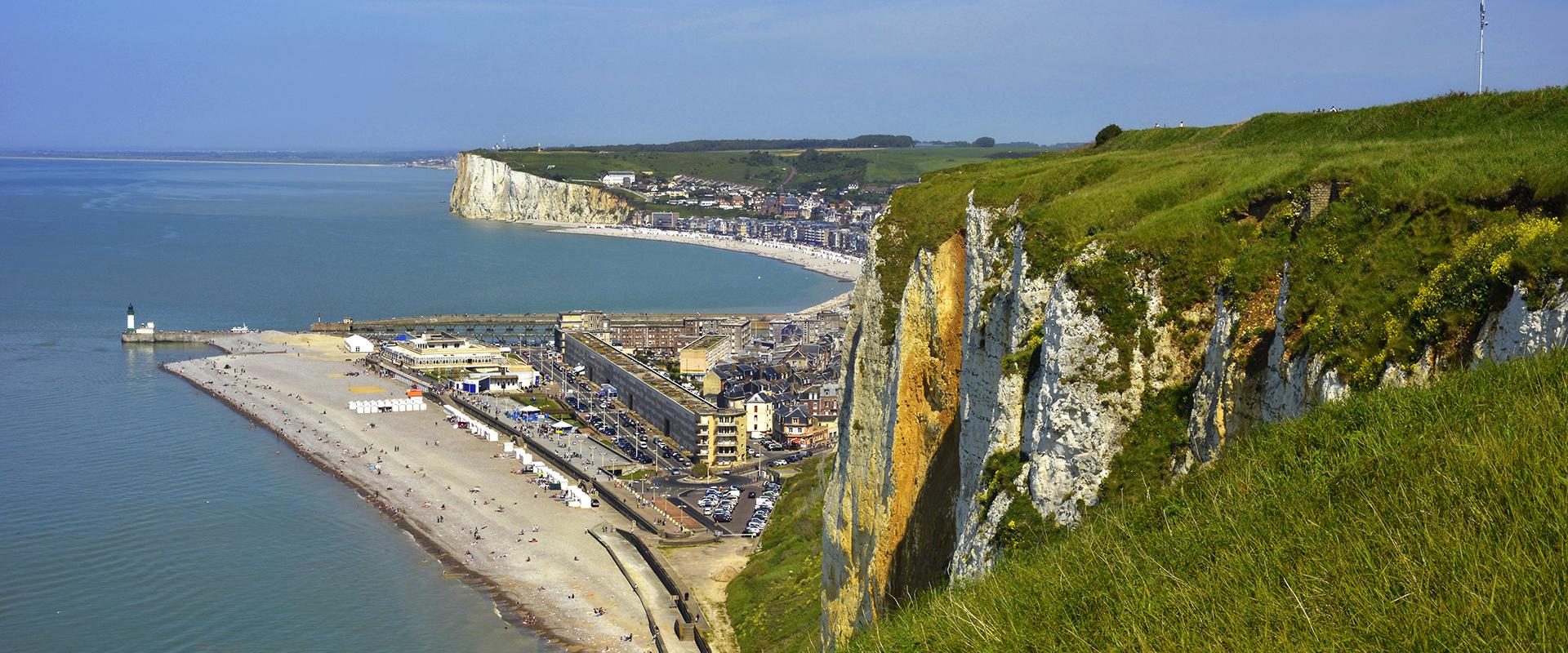
Today, the French coastline is increasingly threatened by climate change but also by increased pressure from human activities.

What are the risks to the coastline? How does this affect local populations? What solutions could we adapt?

France has a rich and varied coastline made up of sandy beaches, cliffs, rocky coasts, mangrove swamps, etc. With almost 20,000 km of coastline counting both metropolitan France and the French overseas departments and territories (DROMs), French territory is obviously concerned by the problems of coastal zone management

Guests: Cécile Capderrey and Gonéri Le Cozannet, Engineers and specialists in coastal risks induced by climate change.

BRGM partners with the L'Esprit Sorcier TV channel

BRGM, the French geological survey, is a partner of L'Esprit Sorcier TV, a new family channel dedicated to science and the environment. Founded by Fred Courant, co-host of the TV show C'est pas Sorcier this channel follows the news of "those who do scientific research on a daily basis", in laboratories as well as on expeditions to the ends of the Earth. A range of themes, among which are energy, climate, biodiversity, digital technology or demography, are covered in different formats, from in-depth programmes to documentaries, reports, events (Fête de la science) and live debates.

BRGM experts regularly appear on Science en questions programmes when the subjects are related to Earth sciences. Replays of these episodes are available on the YouTube channel L’Esprit Sorcier TV.