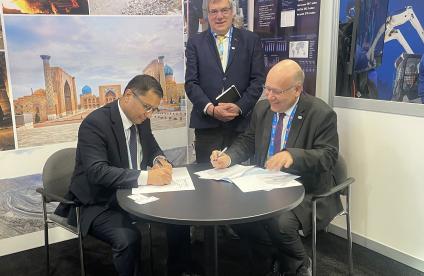
The ALARIC project, co-financed by the European Regional Development Fund (ERDF) and the national fund for regional planning and development (FNADT), enabled BRGM geologists to reconstruct the geological map of the Occitania region.
15 November 2023

ALARIC: the geological map of Occitania

Thanks to the ALARIC project, BRGM geologists have been able to reconstruct the geological map of the Occitanie region. In doing so, they have been able to trace the extraordinary evolution of the region over more than 600 million years. The video shows you some emblematic geological sites and also explains how our geologists created the map.

© BRGM

OCCITANIE GEOLOGICAL MAP ALARIC PROJECT 

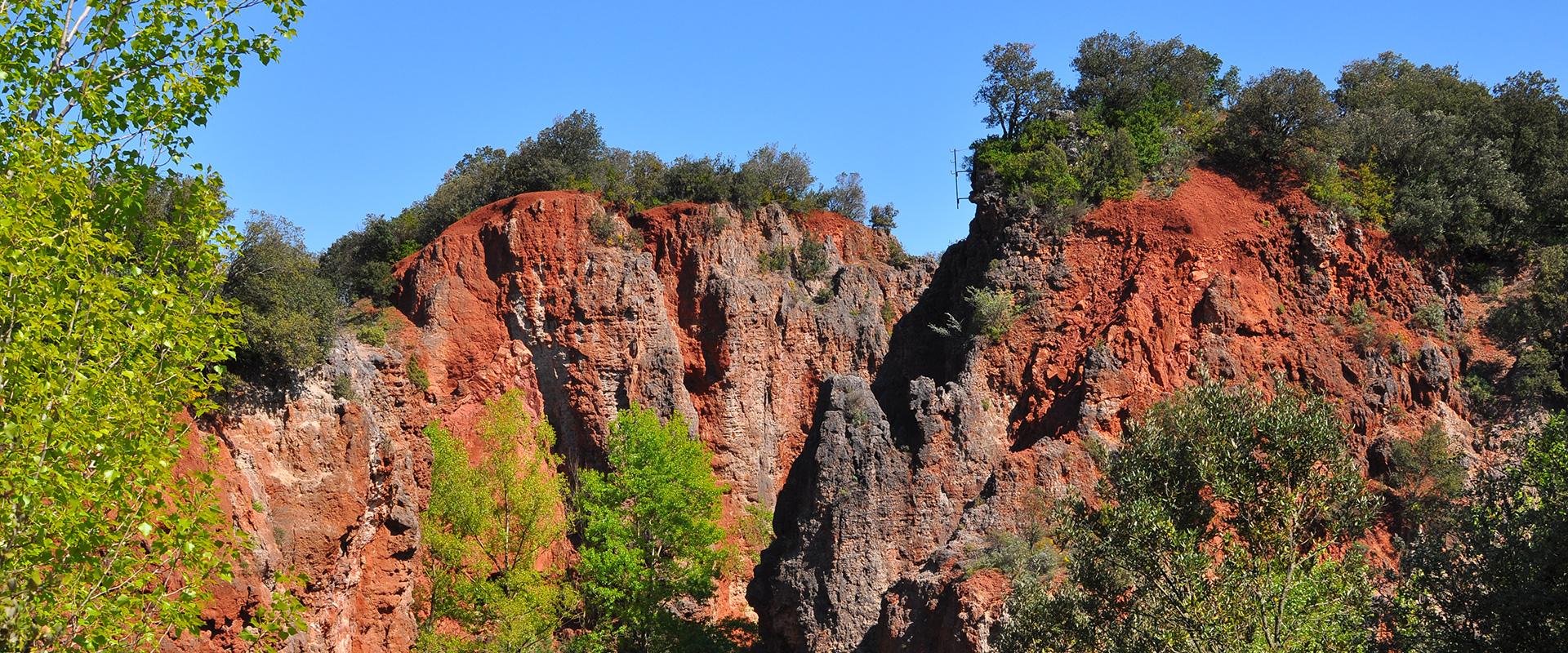
The Occitanie region spans a vast area from the Massif Central to the Pyrenees, between the Aquitaine and Southeast basins. Its landforms sit atop a varied subsoil, composed of a multitude of rocks formed at various times in the Earth's history. That history can be seen in a very colorful document, a veritable goldmine of information for geologists: the geological map. Each color on a geological map corresponds to an age and type of rock, based on international conventions on geological time scale. In the field, geologists identify the rocks they observe depending on their type, the fossils they contain, their age and possible changes after their formation. They also observe geometric relationships between rocks. They report their field observations on a map and place colored dots on it for each geological formation and symbols to indicate the plunge of the measured layers. Using a topographical representation, geologists draw contours corresponding to limits between the formations they observe, along with the geometry of the rocks observed on the surface. A geological map indicates the type, age and organization of rocks seen above ground. As this rock geometry continues underground, the geological map also offers an interpretation of the organization below the surface. With the help of drilling data, the map becomes a 3D representation of what is underground. The geological map represents the current distribution of rocks. In the field, geologists look for clues to help them study, understand and reconstruct the geological events that led to the presence of rocks above ground and place them into a coherent story. Geological events are linked to the tectonic activity driven by the planet's internal dynamics. Understanding what is underground thanks to a geological map is of major interest for most human activities, such as exploiting the natural resources necessary for our modern societies, especially drinking water, energy and non-energy raw materials, building materials and metals, and identifying, preventing and managing natural hazards like earthquakes, landslides, floods and coastal erosion that threaten human activities. Thanks to scientific knowledge, we can tell the geological story of the Occitanie region, one that goes back 600 million years. Here are a few examples. Canigou shale, 570 million years old, deformed at the same time as gneiss and granite during the Hercynian orogeny 310 million years ago. Lherzolites, at an altitude of 1000m in the Pyrenees, were born in ocean basins 100 million years ago. Salt mines were deposited 200 million years ago in Salies-du-Salat. The Pyrenees rose up 40 million years ago, bringing marine limestone up to an altitude of 3000m, like in Gavarnie. Fossils show mammals, reptiles, amphibians and birds lived in Gers in a tropical climate 15 million years ago. Griotte limestone turned into marble 310 million years ago. Red clay and sandstone in Lodévois were deposited 270 million years ago during the Permian period. 160 million years ago, the vast Jurassic ocean deposited hundreds of meters of limestone that today make up the Grands Causses. The geological map is a wonderful scientific document summarizing knowledge of what is underground to serve scientific research and education to meet the challenges of managing the resources and land our modern societies are built on. The amazing geodiversity of the Occitanie region constitutes a geological heritage that tells part of France's geological story.