Your career at BRGM
We attach great importance to helping you further your career by providing you with opportunities to develop your skills, take on responsibilities, work in different geographical regions and on international assignments, so as to take your expertise beyond our national borders. Ongoing occupational training is central to your career development, which is why we devote 6% of our payroll to the training budget.
Logo of the European HRS4R “Human Resource Excellence in Research” label.
© European Union
HRS4R certification to make BRGM more attractive
BRGM was the first Public Industrial and Commercial Institution (EPIC) to obtain HRS4R "HR Excellence in Research" certification from the European Commission. In relation to this, it implements a continuous improvement process with regard to the recruitment of researchers and their working conditions. The purpose is to make BRGM more attractive on the job market.
Quality of life at work and prevention of psychosocial risks
In 2017 and 2018, in order to reduce psychosocial risks, BRGM implemented a plan for the Improvement of Working Conditions. In particular, this plan has made it possible to:
- take measures to prevent psychosocial risks,
- to create a unit for resolving stressful situations at work which has been meeting regularly since 2017.
In January 2019, BRGM carried out a first social survey among its employees to find out how they perceived the quality of life at work. This survey achieved a 76% response rate. Based on the 10 criteria of this survey that revealed the lowest levels of satisfaction, an action plan was implemented jointly with some forty volunteer employees to improve working conditions over a 2-year period (September 2019 - December 2021). The new plan, called PACT-2021 plan ended in December 2021 with an honourable completion rate of 82%, despite the health constraints.
In January 2022, a second social survey was sent to BRGM's 1,000 employees (78% response rate). On the basis of this new survey, a new plan to improve working conditions is currently under construction.
BRGM's commitment to equality between women and men at work
Agreement on professional equality between women and men
Through its new agreement on professional equality between women and men, signed in 2021 for a period of 3 years (2021-2024) by its management and the three trade unions, BRGM is strengthening its commitment to equal opportunities through the implementation of “positive actions”, by addressing 7 issues:
- Equal pay for women and men;
- Enabling women's access to executive positions;
- Gender parity in geoscience professions and reinforced mixing of professions with unbalanced gender percentages;
- Reconciling work, personal life and parenthood;
- Access to international assignments for young parents and women;
- Preventing and fighting against all forms of sexism at work;
- Building a genuine culture of equality.
The 2023 equality index
At BRGM, the gender equality index provided for by the Act of 5 September 2018 on freedom of choice in professional careers, scored 94/100 in 2023.
The score is calculated from five indicators:
- Concerning equal pay, the salary gap between men and women at BRGM was 0.7% more favourable to men (in 2022 it was 1.1% more favourable to men).
- Concerning pay rises, the overall rate of increase was 1.5% greater for men (in 2022, the rate was 1% greater for men).
- Concerning promotions, a total of 0.1% more men were promoted than women (in 2022, the rate was 0.5% more favourable to men).
- One hundred percent of women returning from maternity leave received the pay increases they were entitled to during their absence (this was also the case in 2022).
- Two women among the ten highest salaries (as in 2022).
Role of the BRGM gender equality officer
The Equality Officer reports to the BRGM Human Resources Director. Following the signing of a new professional equality agreement between women and men at work, signed in April 2021 by the General Management of BRGM and its three trade unions, for a period of 3 years (2021-2024), the role of the Equality Officer is to steer the equality policy towards real equality between women and men at work, particularly for the scientific population of our research establishment, which is made up of one third women and two thirds men (average proportion in the Earth sciences in France).
In order to achieve this overall objective, his function is to put into action and ensure the follow-up (quantitative indicator) of this ambitious agreement through the implementation of "positive actions", responding to 7 challenges:
- gender parity in the geoscientific professions and mixing of very unbalanced professions;
- enabling women's access to executive positions;
- reconciling work, personal life and parenthood;
- access to international assignments for young parents and women;
- equal pay for women and men;
- building a genuine culture of equality ;
- preventing and fighting against all forms of sexism at work.
In this regard, he is in charge of combating sexual harassment and sexist acts at BRGM.
This position of Equality Officer is part-time at the rate of one day per week for a period of 3 years (duration of the agreement). It is provided by the Diversity & Inclusion manager who began his assignment in September 2015.
Prevention campaigns against gender-based and sexual violence at BRGM
Since January 2020, BRGM has undertaken to combat gender-based and sexual violence at work. Several measures have been implemented such as:
- the appointment of 4 in-house coordinators to combat sexist behaviour and sexual harassment, to register complaints by victims and to determine the nature of any improper behaviour;
- the setting-up of a reporting system including a generic email address and a psychological-support unit staffed by a pair of coordinators;
- the distribution of a flyer to all staff to raise awareness of the different types of gender-based and sexual violence and to publicise the reporting system;
- the creation of a training MOOC, within the framework of a European project, with BRGM as the pilot company in partnership with PSYTEL;
- the setting-up of prevention sessions, particularly for new managers and new recruits;
- a conference by Natacha Henry, for BRGM staff, entitled “Stop gender-based violence at work”, held on 8 March 2021.

Gender equality: key figures
-
94.00/ 100Gender equality index at BRGM for 2023
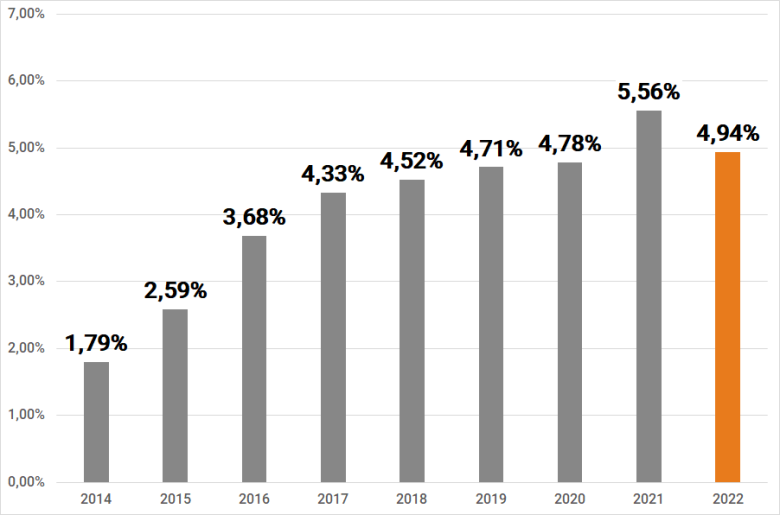
Evolution of the direct disability employment rate at BRGM.
© BRGM
Disability at BRGM: inclusion through competence
BRGM is committed to promoting the employment of employees with disabilities. It is developing a proactive and institution-wide policy to promote inclusion through competence.
Since 2015, BRGM has been implementing an action plan with 5 goals:
- Raising awareness to change the way we perceive disabilities and build trust.
- Ensuring job stability for disabled employees through personalised support (or by adapting workstations) and accessibility to BRGM sites.
- Sustainable recruitment to include all talents.
- Providing training to help young people with disabilities build more secure career paths (through internships, work-study contracts, summer jobs, etc.).
- Innovating in collaboration with the sheltered or adapted employment sector (ESATs, EAs, etc.) to contribute to indirect employment and visible inclusion at BRGM.
Over 7 years, the disability employment rate at BRGM has risen from 1.8% in 2014 to 5.6% in 2021, thus narrowing the gap with the regulatory target of 6%.
In February 2020, BRGM signed the Inclusive Business Charter, which is part of the national initiative "France, an opportunity, businesses commit".
In 2021, BRGM received the Agefiph #activateur_de_progres award for its efforts to keep disabled employees in employment by adapting their jobs.
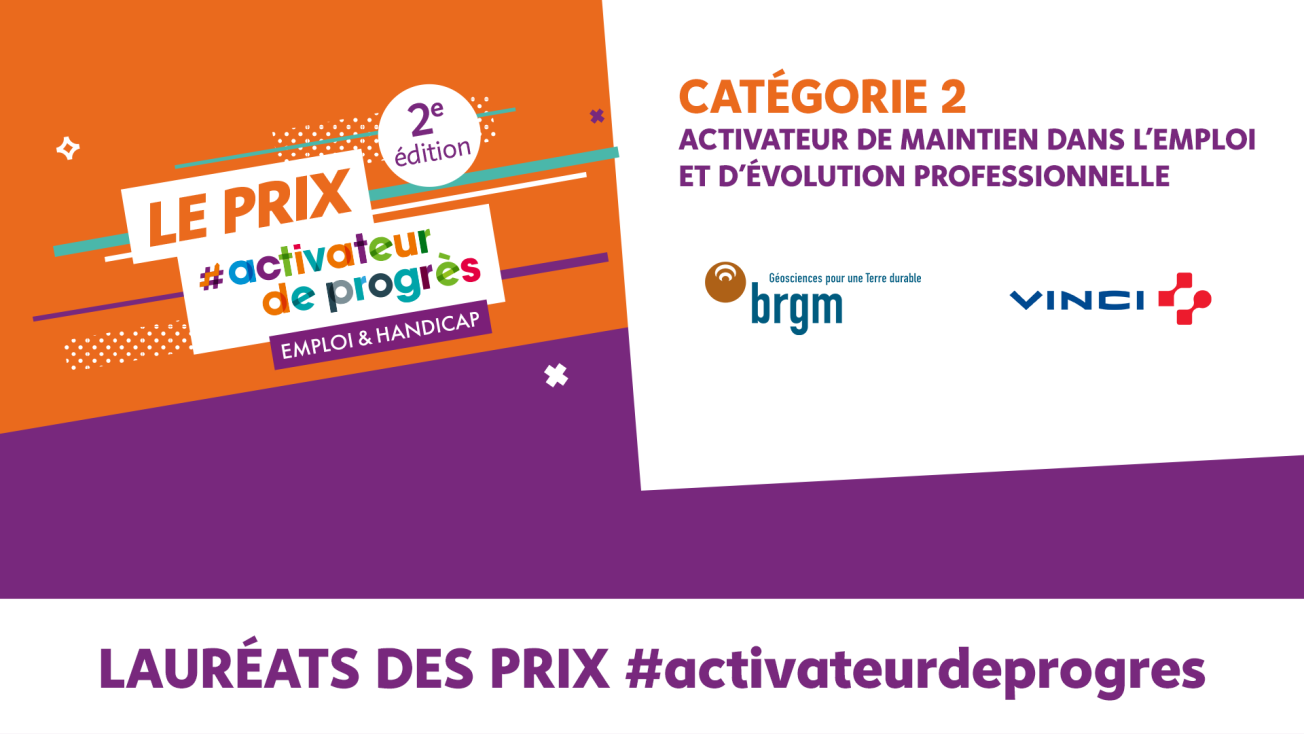
BRGM has received an award from Agefiph in 2021 as part of its #activateurdeprogres programme, in the "Activator of job stability & professional development" category, in which Vinci also received an award.
© Agefiph
Social report: key figures
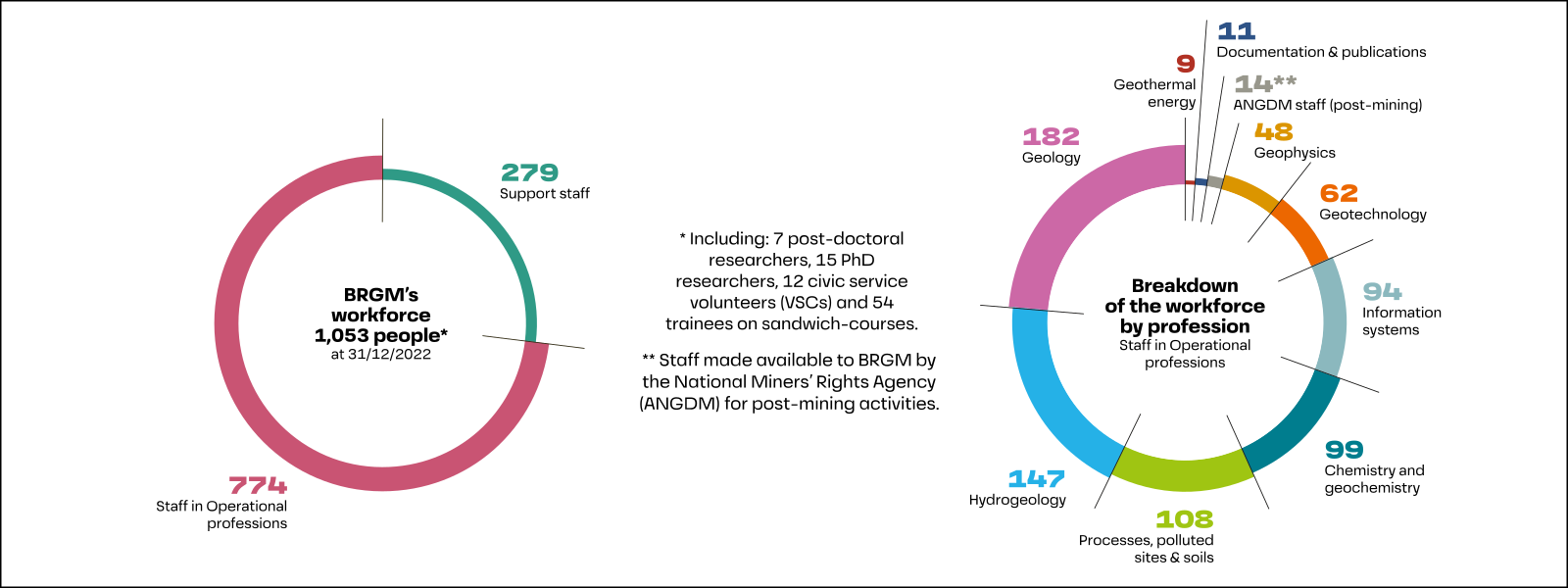
BRGM's workforce on 31 December 2022 and distribution by profession.
© BRGM
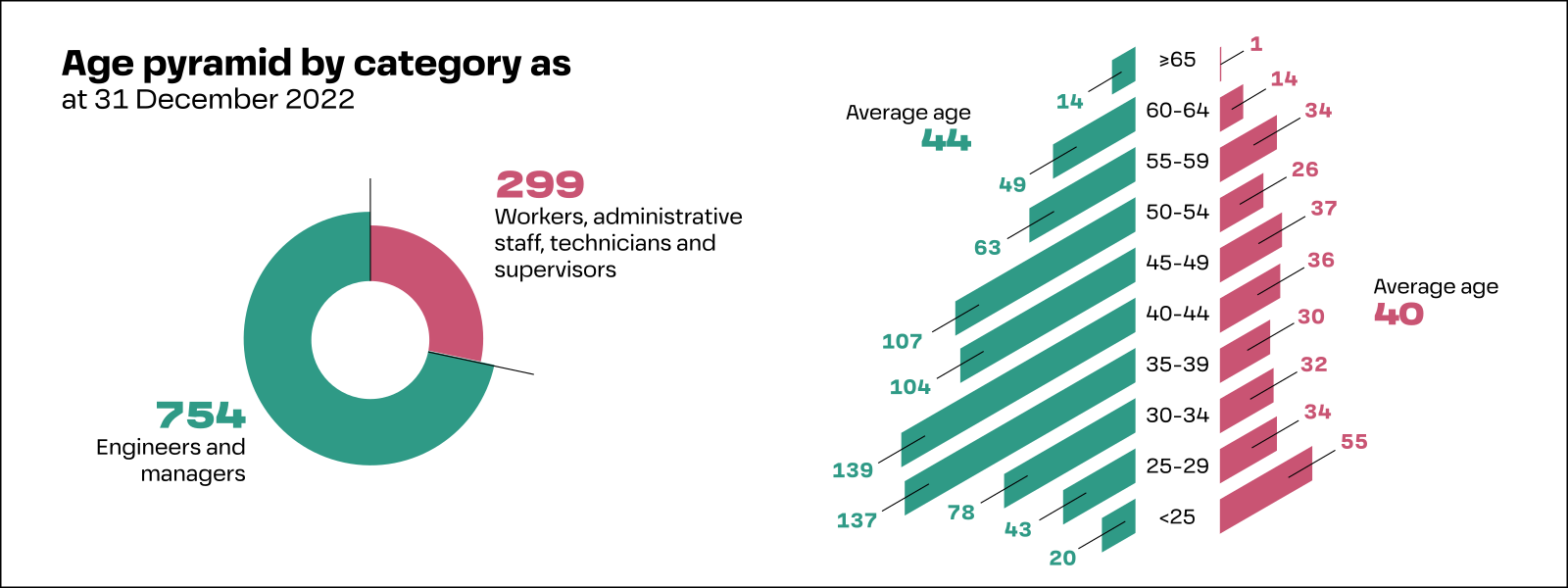
BRGM age pyramid as of 31 December 2022.
© BRGM